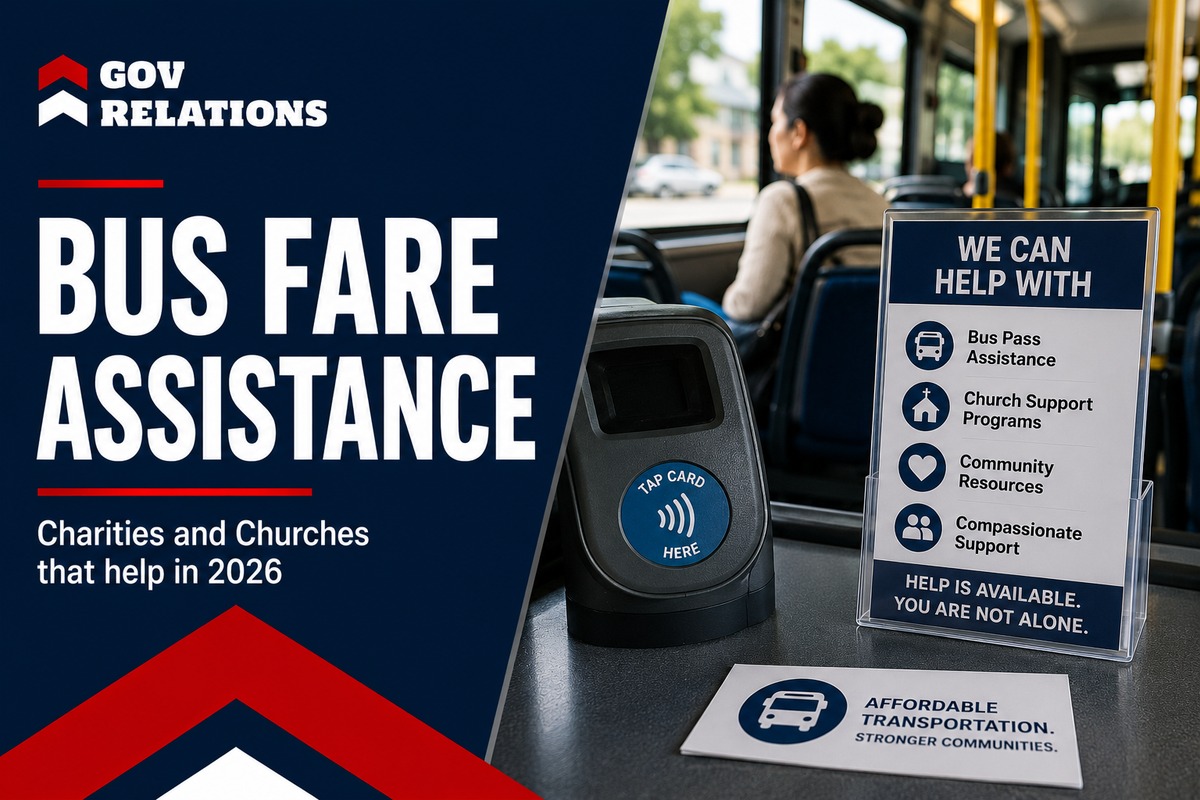
You can get a free bus ticket through several charities and churches that help with bus tickets, along with a small number of government programs, if you meet specific eligibility rules. The Home Free program, a partnership between Greyhound and the National Runaway Safeline (NRS), has reunited nearly 20,000 runaway and homeless youth with their families since it launched in 1995, according to a 30-year anniversary announcement from Greyhound in November 2025. Other organizations that help with bus tickets include The Salvation Army, Catholic Charities, Travelers Aid International, and thousands of local congregations, each with its own rules and documents required. The 211 helpline made 19 million referrals for local help in 2025, with transportation among the top categories, according to United Way's 2025 Impact Survey.
This guide explains which programs you qualify for, what documents you need, how to apply, and how to spot the scam offers that target people searching for free bus tickets online.
Key Takeaways
- Home Free is the largest program: Free Greyhound tickets reunited nearly 20,000 youth ages 12 to 21 with their families between 1995 and 2025 through the National Runaway Safeline.
- The Salvation Army gives local bus help: Local corps offer bus passes or tokens for verified medical visits, jobs, and family crisis travel, with funding that varies by city.
- 211 connects you to local options: The United Way 211 helpline made 19 million referrals in 2025, including transportation help, and operates 24/7 in over 180 languages.
- Faith-based help is local, not national: Catholic Charities, United Methodist, Baptist, and Presbyterian churches handle bus ticket help at the parish or congregation level.
- Proof is required for almost every program: Job offer letters, medical appointment slips, ID, and proof of income are the most common documents requested.
- Scams target this exact search: No real charity asks for a credit card number or a fee to issue a free bus ticket, and that is the clearest way to spot a fake offer.
Who Qualifies for Free Bus Tickets From Charities and Churches?
You qualify for a free bus ticket if you fall into one of four categories: a runaway or homeless youth ages 12 to 21, a low-income adult with a documented immediate need (medical appointment, job, or family crisis), a patient traveling for medical care, or a person already enrolled in a public assistance program like SNAP, MedicaidA joint federal and state program that helps with medical costs for some people with limited income ..., or TANF. Programs almost never give out free tickets for general travel, open-ended relocation, or vacations.
Most programs require proof that the trip serves a specific purpose. The Salvation Army's Fox Cities corps in Wisconsin, for example, requires proof of a medical appointment or proof of employment before issuing a bus pass, and explicitly does not give passes for job interviews. National programs work the same way. Home Free will not issue a Greyhound ticket without a verified destination, a contact at that destination, and a phone call to the NRS hotline at 1-800-RUNAWAY (1-800-786-2929).
Income thresholds vary by program. Federal programs like Transit Assistance Programs and Community Action Agency vouchers typically ask for proof of enrollment in SNAP, Medicaid, TANF, or another public benefit, which means your income is already verified. Charities like The Salvation Army and Catholic Charities make case-by-case decisions based on demonstrated need rather than fixed income limits.
What National Charities Help With Bus Tickets?
Four national organizations issue or arrange free bus tickets across the United States: the Home Free program, Travelers Aid International, Mercy Medical Angels, and the 211 helpline operated by United Way. Each one serves a different reader, and starting with the wrong organization wastes time you do not have to waste.
Home Free Program (National Runaway Safeline + Greyhound)
The Home Free program is the only national bus reunification program in the country. Eligibility is strict: the rider must be ages 12 to 21, must self-identify as a runaway, homeless, or trafficking victim, and must be willing to return to a parent, legal guardian, or approved alternative safe living arrangement. In 2025, the National Runaway Safeline took more than 39,000 calls, texts, emails, and chats from young people in crisis, according to Spectrum News reporting on NRS in January 2026. The program also issues a round-trip ticket to a parent or guardian who needs to escort a younger youth home.
Travelers Aid International
Travelers Aid International is a network of social service agencies stationed at major transportation hubs. The organization operates desks at 17 airports, 7 train stations, and several bus depots, and works in partnership with Greyhound to provide discounted bus tickets to travelers in distress. Travelers Aid focuses on stranded travelers, people facing dangerous situations during a trip, and those who need help completing a journey already in progress.
Mercy Medical Angels
Mercy Medical Angels is a medical transportation charity. It provides commercial airfare, gas cards, and ground transportation for patients who need to travel for medical care, with services available nationwide. Eligibility requires documentation of a medical appointment and demonstration of financial need. This is the right organization to contact if your reason for travel is treatment, surgery, or specialist care that is not available locally.
211 (United Way)
211 is not a charity but a free helpline operated by United Way that connects callers to local transportation programs. According to United Way's 2025 Impact Survey, the 211 network made 19 million referrals in 2025, an increase of more than 1 million from 2024. Transportation has consistently ranked as a top-five need on 211 calls. United Way's Ride United program, started in 2018, pairs callers with free Lyft rides for medical appointments, food pantries, and job interviews where regular bus service does not meet the need.
How Does the Salvation Army Help With Bus Tickets?
The Salvation Army issues bus passes, tokens, and one-way bus tickets through its local corps offices. Help is available for verifiable immediate needs: medical appointments, job interviews, or first-month employment travel, court appearances, and family reunification during a crisis. The Salvation Army operates corps in nearly every ZIP code in the country, but specific transportation services and available funds vary by location. The Salvation Army's Northern Division in Minnesota and North Dakota, for example, provides bus cards and gas money to clients with appointments at local service centers.
To request help, you call your local Salvation Army corps and schedule a confidential appointment with a caseworker. Bring proof of your need (medical appointment slip, employment offer letter, court summons), a government-issued ID, and proof of address. The caseworker assesses the situation and decides whether transportation help is the right form of assistance for you. Some corps issue tickets the same day, while others take several business days to verify documents and confirm available funds.
In some cities, The Salvation Army partners with local transit agencies to provide reduced-fare passes. The Connection Center, operated by the Intermountain Division of The Salvation Army in Denver, offers RTD tickets and one-way Greyhound bus tickets to homeless individuals returning to their families in other states. Similar partnerships exist in Minneapolis, Indianapolis, Iowa City, and other metro areas.
Which Catholic Charities and Faith-Based Churches Help With Bus Tickets?
Catholic Charities is the largest faith-based network providing emergency transportation help, with diocesan offices serving every state. Like The Salvation Army, transportation help is handled at the local level. Diocesan offices may issue bus fares for medical care, employment, and emergency family situations. Catholic Charities of Johnson County in Iowa, for example, requires an appointment and a written application before issuing a Greyhound or Trailways ticket for crisis reunification. Bus tickets through Catholic Charities are usually for travel within or near the diocese, not for cross-country journeys.
Protestant and nondenominational congregations also provide bus tickets and bus pass help through their community outreachActivities aimed at engaging and involving the community in the project, often to build support and ... ministries. United Methodist, Baptist, Presbyterian, and Lutheran churches commonly offer:
- Volunteer driver programs for the elderly, disabled, and low-income members
- Shuttle services to medical appointments and grocery stores
- Discretionary pastor's fund grants for one-time bus passes (job interviews, medical visits)
- Local transit pass purchase for active church members and community participants
Help from local congregations is rarely advertised online. The most effective approach is to call the church office directly, explain the situation in a sentence or two, and ask whether the church has a discretionary fund or outreach program for transportation help. Smaller congregations may not have a formal program, but often have funds set aside for community members in immediate need.
Which Bus Ticket Program Should You Contact First?
Use this table to find the program most likely to help your specific situation. Calling the wrong organization first is the most common reason that requests get delayed or denied.
| Program | Best For | Eligibility | How to Apply |
|---|---|---|---|
| Home Free (NRS + Greyhound) | Free Greyhound ticket for runaway, homeless, or trafficked youth | Ages 12 to 21; willing to return to a parent, guardian, or safe placement | Call 1-800-RUNAWAY |
| The Salvation Army | Local bus passes, tokens, and short-distance tickets | Verified medical, job, court, or family crisis need; ID and proof required | Call local corps for an appointment |
| Catholic Charities | Crisis travel and family reunification within the diocese | Documented immediate need; application and appointment required | Contact local diocesan office |
| Travelers Aid International | Stranded travelers at airports, train stations, and bus depots | In active travel; case management at staffed locations | Visit a Travelers Aid desk at the station |
| Mercy Medical Angels | Long-distance travel for medical treatment | Proof of medical appointment plus demonstrated financial need | Apply online or through a referring clinician |
| 211 Helpline (United Way) | When you do not know which program to call first | Open to anyone; navigator matches you to local programs | Dial 2-1-1 or visit 211.org |
| Community Action Agencies (CAAs) | Emergency bus tokens and one-way tickets for essential trips | Income at or below ~200% of federal poverty level; CSBG eligibility | Contact your local CAA office |
| Local Churches | One-time bus pass help through pastor's discretionary fund | Local resident in immediate need; varies by congregation | Call the church office and ask directly |
How to Apply for a Free Bus Ticket: Step-by-Step
Follow these steps in order. Skipping the documentation step is the most common reason that requests get denied.
- Identify the program that fits your situation. A runaway youth under 21 should call NRS. A patient with a medical appointment should call Mercy Medical Angels or 211. A working adult needing job-related travel should contact a local Salvation Army corps. Calling the wrong program first wastes time and reduces the chances of approval.
- Gather your documents before you call. You will likely need a government-issued photo ID, proof of address (utility bill, lease, or shelter letter), proof of income or proof of public assistance enrollment, and documentation of the specific need (medical appointment slip, job offer letter, court summons, or family emergency contact).
- Call ahead to schedule an appointment. Most charity and church programs require an in-person caseworker meeting before issuing a ticket. Walk-ins are rarely accommodated. Phone the local corps, parish, or congregation, explain your situation in one or two sentences, and ask what documents to bring.
- Attend the appointment and answer questions clearly. The caseworker will ask about your situation, your income, your support network, and the specific purpose of the trip. Answer honestly. Caseworkers are trained to identify situations where a bus ticket will actually solve the problem versus situations where another form of help is needed first.
- Confirm the format of the help. Programs issue tickets in different forms: a physical Greyhound ticket, an electronic ticket sent by email, a bus pass loaded onto a transit card, or a voucher to redeem at the station. Ask the caseworker how you will receive the ticket and what backup documentation you should carry.
- Follow up after the trip if required. Some programs, including Home Free, follow up to confirm safe arrival. Cooperating with follow-up requests preserves your eligibility for future help and supports the program's ability to keep operating.
Government Programs That Help With Bus Tickets
Beyond charity-based programs, several government initiatives reduce or eliminate bus fare costs for low-income riders. These are usually local or state-level programs that you have to enroll in separately from federal benefits like SNAP or Medicaid, even though the eligibility rules often overlap.
Transit Assistance Programs (TAP) offered by regional transit agencies provide low-cost or free bus passes to eligible riders. Metro Transit in the Minneapolis-St. Paul Area operates a TAP that gives qualifying low-income riders a year-long pass at $1 per trip. Hillsborough County's Bus Pass Program in Florida offers door-to-door transit and bus passes to elderly, low-income, and disabled riders. Eligibility usually requires proof of SNAP, Medicaid, or Free/Reduced Lunch enrollment.
Community Action Agencies (CAAs) are local nonprofits funded by the federal Community Services Block GrantA lump sum of money granted by the federal government to a state or local authority to support broad.... Most CAAs offer emergency assistance that can include bus tokens or one-way tickets for essential trips (medical care, job interviews, court appearances). Eligibility is typically income at or below 200 percent of the federal poverty level, plus proof of immediate need.
Federal Transit Administration (FTA) Enhanced Mobility programs fund local agencies that provide door-to-door transit service for seniors and people with disabilities. According to the FTA, these programs cover local bus travel for medical and essential trips, though they do not issue Greyhound tickets for intercity travel.
TANF and SNAP work-related transportation help. Some states use TANF (Temporary Assistance for Needy Families) funds to provide bus passes or gas cards to recipients searching for or starting work. Eligibility is set at the state level. Contact your local Department of Social Services or Workforce Investment Board to find out what your state offers.
Key Terms and Acronyms You Should Know
Government and charity programs use a lot of acronyms. Define them once and the rest of this guide is easier to follow.
- NRS: National Runaway Safeline. The nonprofit that operates the 1-800-RUNAWAY hotline and issues Home Free tickets.
- TAP: Transit Assistance Program. A category of regional transit programs that offer reduced fares for low-income riders.
- CAA: Community Action Agency. A local antipoverty nonprofit funded by federal block grants.
- CSBG: Community Services Block GrantA sum of money given by a government or other organization for a particular purpose, usually without.... The federal funding source for CAAs.
- SNAP: Supplemental Nutrition Assistance Program. The federal food assistance program (formerly food stamps). Enrollment in SNAP qualifies you for many transit and transportation programs.
- TANF: Temporary Assistance for Needy Families. The federal cash assistance program for low-income families with children.
- Discretionary fund: A pool of money a church pastor or social services office controls to spend on member needs case by case, with no formal application.
- Voucher: A document you exchange at a transit office or bus station for a ticket or pass.
⚠ Scam Warning: How to Spot Fake Bus Ticket Offers
Free bus ticket scams target people searching for help online and have become more common in the past two years. Before you apply or share any personal information, learn how to tell the difference between real and fake offers.
- Real bus ticket programs never charge a fee. Any website or person who asks you to pay a processing fee, application fee, or shipping fee for a free ticket is running a scam. Home Free, Salvation Army, Catholic Charities, and Travelers Aid are free at the point of service.
- Real programs never ask for a credit card or bank account number. No legitimate charity needs your payment information to issue a free ticket. If a site asks for a card to verify identity or to hold your reservation, close the page.
- Real programs use .org or .gov domains. Home Free is at 1800runaway.org. Travelers Aid is at travelersaid.org. The Salvation Army is at salvationarmyusa.org. United Way 211 is at 211.org. Any URL that uses the program name plus an unusual address (.shop, odd subdomains, chains of words) is suspicious.
- Real programs do not contact you first. If you receive an unsolicited text, email, or phone call offering a free bus ticket you did not apply for, it is a scam. Charities respond to your inquiry. They do not solicit clients.
- Real programs require documentation. Any offer that promises a free ticket without proof of need is suspicious. The documentation requirement is exactly what keeps legitimate programs operating.
If you encounter a suspected scam, report it to the Federal Trade Commission at ReportFraud.ftc.gov. Do not click links in suspicious messages and do not share your Social Security number, bank information, or copies of your ID with unverified sites.
Real-World Example: A Patient Travel Case Through 211
A 70-year-old woman in Independence, Missouri, was released from a hospital emergency room and had no way to get home. She called 211. A community resource navigator connected her with a free Lyft ride through United Way's Ride United program. According to United Way of Greater Kansas City, the local chapter exceeded its Ride United goal in 2025 by providing more than 3,300 rides to people who could not afford transportation.
This case is typical of how the 211 system works. The caller does not know which exact program will help when they dial in. The community resource navigator assesses the situation, identifies the right program (Lyft ride, bus pass, Salvation Army voucher, Catholic Charities case management), and connects the caller directly. The caller does not need to know the names of the programs to access them. This is the single fastest way to find bus ticket help when you do not know where to start.
Start With 211, Then Contact the Program That Matches Your Trip
If you need help with a bus ticket, start with the organization that fits your situation. Young people ages 12 to 21 in a runaway, homeless, or trafficking situation should call the National Runaway Safeline at 1-800-RUNAWAY. Patients traveling for non-local medical care should check Mercy Medical Angels or ask 211 for medical transportation referrals. Adults who need help with local bus passes for work, court, medical appointments, or a family emergency should contact 211, The Salvation Army, Catholic Charities, a local Community Action Agency, or nearby churches.
Free bus ticket help is real, but it is usually limited to verified emergencies, not open-ended relocation or general travel. Bring proof of your appointment, job, family crisis, income, or public-benefit enrollment, and avoid any website or message asking for a fee, credit card, or bank information.
Need more transportation options beyond bus tickets? Read Gov-Relations’ guide to churches that help with rent and housing for more places to check when you need emergency travel assistance.
Frequently Asked Questions
Can I get a free Greyhound bus ticket from a charity?
Yes, but only for specific situations. The Home Free program, operated by the National Runaway Safeline and Greyhound, issues free Greyhound tickets to runaway and homeless youth ages 12 to 21. Adults can sometimes get a Greyhound ticket through The Salvation Army, Catholic Charities, or a Community Action Agency for verified crisis travel, like a confirmed job in another city or a family emergency.
What is the easiest charity to get a bus pass from?
The Salvation Army is often a good first call because many local corps offer emergency assistance, but transportation help depends on local funding and rules.
Do churches really give out bus passes?
Yes. United Methodist, Baptist, Catholic, and Presbyterian congregations often have discretionary funds that pastors and ministry coordinators use to help community members with one-time needs, including bus passes for job interviews, medical visits, or family emergencies. Help is rarely advertised online. Call the church office directly to ask.
Will calling 211 actually get me a bus ticket?
Often, yes. 211 does not issue tickets directly. The community resource navigator connects you to the local program most likely to help, which can include The Salvation Army, Catholic Charities, a local Community Action Agency, or a free Lyft ride through United Way's Ride United program. In 2025, 211 made 19 million referrals nationwide.
Can I get a free bus ticket to relocate to another state?
This is the hardest category to find help for. Most charities issue bus tickets for documented family reunification, a confirmed job in another city, or escape from an unsafe living situation. Open-ended relocation requests are usually denied. Travelers Aid International handles some of these cases through its station-based offices. Call 211 first to see what local options exist for your specific situation.
How long does it take to get approved for a free bus ticket?
National programs like Home Free can issue a ticket within hours once the call to NRS is complete. The Salvation Army and Catholic Charities typically need 1 to 5 business days after your appointment because they verify documents and check available funds. Community Action Agencies vary, with some operating same-day emergency funds and others scheduling appointments weeks out. Call ahead to confirm timing.
Do I need to be a US citizen to get help with a bus ticket?
For most local charity and church programs, citizenship is not a requirement. Catholic Charities, The Salvation Army, and Travelers Aid help people regardless of immigration status. Federal programs that require enrollment in SNAP, TANF, or Medicaid (like some Transit Assistance Programs) have their own citizenship and residency rules. Ask the program directly about your specific situation.