Catholic Charities USA is a major affordable housing provider with over 35,000 units in the U.S.[1]
A significant national shortage of affordable housing persists despite ongoing efforts.[1]
Churches are repurposing surplus properties into housing for vulnerable populations, including seniors and those needing substance-use recovery.[1]
In 2020, 580,466 Americans were homeless, a 2.2% increase from 2019.[2]
A huge mismatch between supply and demand made paying rent virtually impossible for low-income families in the first months of 2023, as many parts of the country saw double-digit rent increases.[3]
Cities in the U.S. are building bigger apartments, and data shows that rent for larger units has risen the most in the last couple of years.[4]
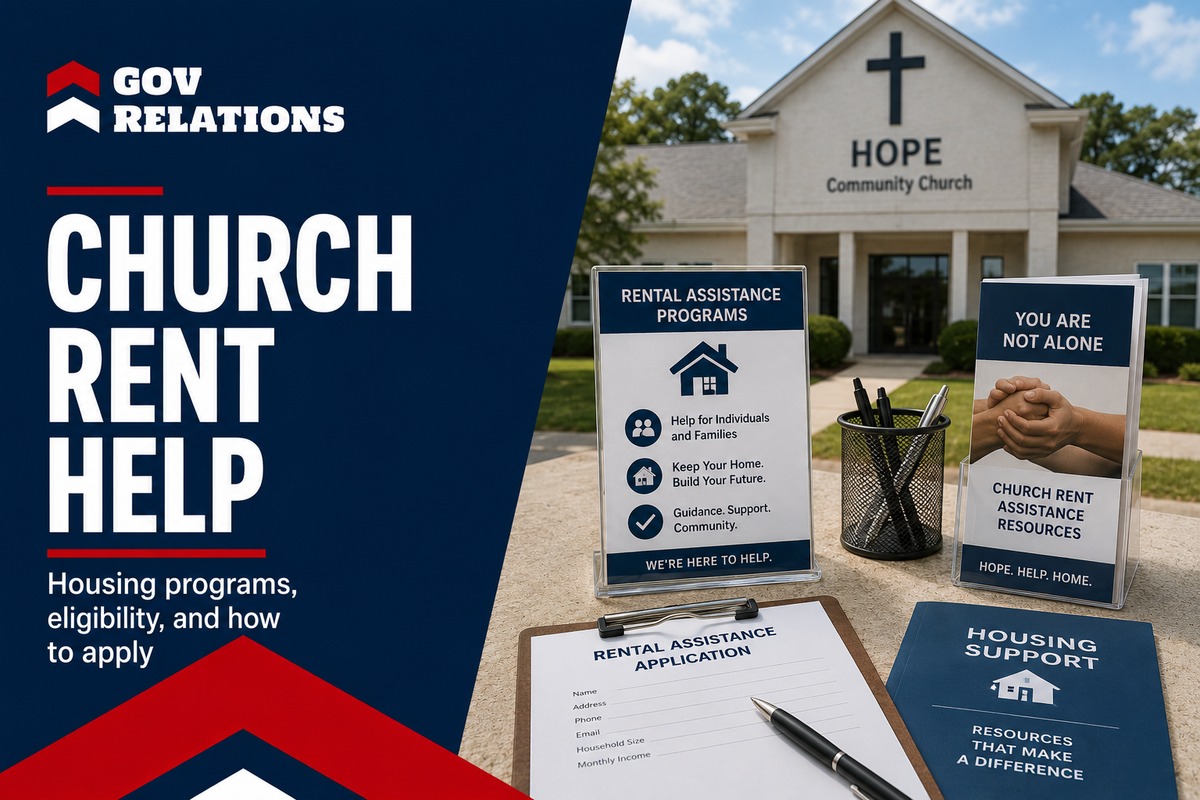
Churches that help with rent and housing include Catholic Charities USA, The Salvation Army, the Society of St. Vincent de Paul, Lutheran Social Services, the United Methodist Church, the Presbyterian Church (USA), and the Episcopal Church. These faith-based networks offer one-time emergency rent payments, transitional housing, eviction prevention, and case management for people in financial crisis. Homelessness in the United States rose 18 percent between 2023 and 2024, reaching 771,480 people, according to the National Alliance to End Homelessness. Church-based programs are part of the safety net, trying to catch families before that number climbs further.
This guide covers which churches help, who qualifies, the documents you need, how much aid you can receive, the exact steps to apply, scams to avoid, and the federal programs you should apply for at the same time. Start with the gov-relations government housing grants guide for the full picture.
Key Takeaways
- Major faith-based networks: Catholic Charities, The Salvation Army, St. Vincent de Paul, and Lutheran Social Services, run the largest church rent assistance programs in the United States.
- Typical aid amount: Church rent help usually ranges from $200 to $1,000 per household and covers one to three months of past-due or upcoming rent.
- Income standard: Most programs require household income below 80 percent of the Area Median Income (AMI) or below the federal poverty guideline for your household size.
- First call to make: Dial 211 to reach the United Way 211 network, which made over 9.1 million housing-related referrals in 2025.
- Scam risk is real: Any program that charges a fee, demands a credit card number, or contacts you out of the blue with offers is fraudulent and should be reported to the FTC.
- Apply in parallel: Church aid covers one short-term gap; federal programs like the Housing Choice Voucher and LIHEAP cover long-term costs and should be applied for at the same time.
Which Churches and Faith-Based Organizations Help With Rent?
Seven major faith-based organizationsReligious groups that provide funding for charitable projects, community services, and humanitarian ... run rent and housing assistance programs across all 50 states. Each network is independently funded, manages its own eligibility rules, and operates through local chapters or parishes. The same denomination can offer different help in different cities, so always call the local chapter rather than the national office.
Catholic Charities is the largest provider in this category. It manages over 38,000 permanent housing units nationwide and runs emergency rental and Rapid Re-Housing programs through diocesan agencies, according to Catholic Charities USA. The Salvation Army reported providing financial assistance for housing, medical, and utility bills to more than 1.5 million households in 2024, per The Salvation Army USA.
The Society of St. Vincent de Paul, often referred to as SVdP, works through volunteer-run "conferences" inside Catholic parishes. Volunteers (called Vincentians) frequently conduct home visits or phone interviews to assess need before issuing direct payments to landlords. Lutheran Social Services and United Methodist congregations operate similar programs through state offices and local outreach ministries. The Episcopal Church and Presbyterian Church (USA) deliver aid at the parish level, often combined with utility help, gas vouchers, and food.
Comparison of Major Church Rent Assistance Programs
| Organization | What They Typically Cover | How to Find a Local Office |
|---|---|---|
| Catholic Charities USA | Emergency rent, transitional housing, Rapid Re-Housing, 38,000+ permanent units | Search by ZIP at catholiccharitiesusa.org |
| The Salvation Army | One-time rent, utility help, motel vouchers, eviction prevention | salvationarmyusa.org local-office locator |
| Society of St. Vincent de Paul | Direct rent payments to landlords, home visits, parish-based aid | svdpusa.org "Get Help" tool |
| Lutheran Social Services | Rent help, family stabilization, case management, transitional housing | lssnational.org state-by-state directory |
| United Methodist Church | Partial or full rent payments, utility aid, counseling | Local UMC outreach office |
| Episcopal Church | Parish-based emergency rent, gas vouchers, and clothing closets | Local parish discretionary fund |
| Presbyterian Church (USA) | Emergency rent, housing counseling, and advocacy | Local PC(USA) congregation |
Who Qualifies for Church Rent and Housing Assistance?
You qualify for most church rent assistance programs if your household income is below 80 percent of the Area Median Income for your area, you can prove an immediate hardship (an eviction notice, a late rent notice, a job loss, or a medical emergency), and you live inside the church's service area. Faith-based groups serve people of every religion and background. You do not need to be a member of the church to receive help.
Common eligibility requirements across faith-based programs:
- Proof of a current crisis, such as an eviction notice, a late rent notice, or a utility shut-off notice.
- Proof that you live inside the church's geographic service area (often a specific ZIP code, county, or parish boundary).
- Household income at or below 80 percent of the local Area Median Income, or below the federal poverty guideline for your household size.
- Photo identification and proof of address for the head of household.
- A signed lease in the applicant's name showing the rent owed.
- Evidence that you can pay future rent on your own (some programs only approve one-time aid for people who can sustain their housing afterward).
Most programs also use the federal poverty guidelines, set each year by the U.S. Department of Health and Human Services, to set income cutoffs. The 2026 poverty guidelines for the 48 contiguous states and the District of Columbia are below.
2026 Federal Poverty Guidelines (48 States + DC)
| Persons in Household | 2026 Poverty Guideline (Annual Income) |
|---|---|
| 1 | $15,960 |
| 2 | $21,640 |
| 3 | $27,320 |
| 4 | $33,000 |
| 5 | $38,680 |
| 6 | $44,360 |
| 7 | $50,040 |
| 8 | $55,720 |
Add $5,680 for each additional person in households larger than 8.
If your income is at or below the figure that matches your household size, you almost certainly qualify for church-based emergency rent aid. If you are above the poverty line but below 80 percent of your local AMI, you may still qualify depending on the program. Call the local office and ask. The volunteer or caseworker will tell you whether your income fits before you fill out paperwork.
How to Apply for Church Rent Assistance: 6 Steps
Applying for church rent help follows a structured process at almost every organization. Funds are limited, and demand is high, so being prepared makes a real difference. Below are the six steps to follow from start to finish.
- Dial 211 first. The United Way 211 network connects you to local churches, charities, and government programs that have funds available right now. In 2025, 211 made over 9.1 million referrals for housing, homelessness, and utility bills. The call is free and confidential.
- Identify three to five local programs to contact. Faith-based aid is local, so a single Catholic Charities agency or Salvation Army office often has very different funding than the one a county over. Cast a wider net than you think you need.
- Call the local church or chapter directly. Ask three questions: Do you have rent assistance funds available right now? What is the maximum amount per household? What documents do I need to bring? Write the answers down.
- Gather your documents before you apply. Most programs require a photo ID, proof of income (pay stubs, unemployment letter, or benefit letter), a signed lease, the late rent or eviction notice, and proof of your address. The next section lists this in detail.
- Submit your application and complete the assessment. This may be an online form, a phone intake, or an in-person interview. SVdP often conducts a home visit. Answer every question honestly. A clear explanation of your situation helps the caseworker advocate for you.
- Follow up politely if you do not hear back in 3 to 5 business days. Volunteers manage many of these programs and applications can sit in a queue. A short, respectful phone call asking for a status update is appropriate and often moves things forward.
Documents You Will Need to Apply
Bring every document below to your first appointment. Missing paperwork is the single most common reason an application is delayed. If you are missing one item, ask the caseworker whether a substitute is acceptable rather than waiting.
- Government-issued photo ID (driver's license, state ID, or passport) for every adult in the household.
- Social Security cards or numbers for every member of the household, if requested by the program.
- Proof of income for the last 30 days: pay stubs, unemployment award letterAn official notification from the grantor indicating that the grant has been approved and outlining ..., Supplemental Security Income (SSI) or Social Security Disability Insurance (SSDI) statement, or a self-attestation form if you have no income.
- A signed copy of your current lease showing the rent amount, the landlord's name, and the address.
- Your late rent notice, pay-or-quit notice, or eviction filing. The closer you are to a court date, the higher your priority.
- A current utility bill showing your name and the address on the lease.
- Your landlord's W-9 form or payment information, since most church programs pay the landlord directly, not the tenant.
How Much Rent Help Can You Receive From a Church?
Most church rent assistance programs awardA general term for funds provided to an individual or organization to support a specific purpose or ... between $200 and $1,000 per household, usually as a one-time payment that covers part of one month's rent or a single past-due payment. A small number of programs cover one to three months of rent through federally funded partnerships. Aid is almost always paid directly to the landlord, not to the tenant.
Examples of typical aid ranges from current programs:
- Love INC affiliates: up to $300 per household per year, distributed through partner churches.
- Catholic Charities agencies: typically 1 to 3 months of past-due rent through Rapid Re-Housing, with case management included.
- Society of St. Vincent de Paul conferences: amounts vary by parish, often $300 to $800, paid directly to landlord.
- The Salvation Army: one-time emergency rent payments, plus motel vouchers when shelters are full.
- LDS (The Church of Jesus Christ of Latter-day Saints) emergency funds: in some local programs, up to $450 toward rent and $275 toward utilities.
Demand far exceeds funding in 2026. Many churches operate on a first-come, first-served basis or only accept applications during brief windows each month. Apply at multiple organizations the same week and accept the first approval you receive. Combining smaller awards from two or three programs is a common path to covering a full month.
A Real Story: How Church-Based Rapid Re-Housing Worked for One Tenant
Faith-based housing programs increasingly use a "housing first" model, which places people in stable housing before treating other issues like employment, addiction, or health. Catholic Charities of Southern Nevada shared a case that illustrates how this works in practice.
Ms. L was a 46-year-old woman who was chronically homeless and lived with a hearing impairment. Through the Rapid Re-Housing program, she secured an apartment equipped with accommodations for her disability. With stable housing in place, she found employment, purchased a vehicle, and eventually graduated from the program. She is now fully self-sufficient.
“Ms. L's story is just one example of the impact Rapid Rehousing and a housing-first approach can have on individuals facing chronic homelessness, helping them meet their basic needs and find stability and independence.”
Source: Catholic Charities USA: The Lasting Impact of Rapid Rehousing.
The lesson for applicants: church-based housing aid is rarely a single check. The strongest programs pair financial assistance with a caseworker who helps stabilize the broader situation. If a program offers case management alongside rent help, accept it.
Scam Warning: How to Spot Fake Church Rent Assistance Offers
Fraudulent "church rent assistance" offers spike whenever real rental aid programs run out of funds. Scammers target people who are already under financial pressure and are least able to recover from being defrauded. Use the checklist below before you respond to any offer.
Red flags of a fake church rent assistance program:
- They charge a fee to "process" or "submit" your application. Real church rent help is always free.
- They ask for your credit card number or bank login to deposit your aid. Legitimate programs pay the landlord directly or issue a check; they do not need your card.
- They contacted you first, out of the blue, by phone, text, email, or social media, offering rent aid you never applied for.
- Their website ends in .org or .com but does not match any verified national church or charity (a real Catholic Charities page is on catholiccharitiesusa.org, a real Salvation Army page on salvationarmyusa.org, and so on).
- They guarantee approval before reviewing your situation. No real assistance program promises an outcome before assessment.
- They pressure you to act "in the next 15 minutes" or claim the funds will disappear if you wait. Real programs have application windows measured in days, not minutes.
If you receive an unsolicited offer for church or government rent help, do not respond, do not click any links, and do not share personal or financial information. Report the offer to the Federal Trade Commission at ReportFraud.ftc.gov. Your report helps the FTC identify and shut down the scammer before others are targeted.
Government Programs to Apply for at the Same Time
Church rent help covers one short-term gap. It rarely solves a long-term housing problem on its own. Apply for federal and state programs at the same time so that you have both an immediate fix and a long-term plan in place.
The four federal programs every household facing a housing crisis should consider:
- Housing Choice Voucher (Section 8): Pays a portion of your rent every month to a private landlord, based on income. Administered through your local Public Housing Agency (PHA).
- Emergency Solutions GrantA sum of money given by a government or other organization for a particular purpose, usually without... (ESG): HUD-funded short-term rental assistance and rapid re-housing for people at imminent risk of homelessness. Distributed through state and local agencies.
- Low Income Home Energy Assistance Program (LIHEAP): Federal program that pays a portion of heating and cooling bills. Reducing your utility burden frees up money for rent.
- Supplemental Security Income (SSI) and SSDI: If a disability is preventing you from working, these federal benefits may apply. SSDI is for people with a qualifying work history; SSI is needs-based.
The U.S. Department of Housing and Urban DevelopmentEligibility for projects aimed at revitalizing urban areas and addressing urban-specific challenges.... (HUD) actively partners with faith-based organizations through programs like the Community Development Block Grant (CDBG)A program by the U.S. Department of Housing and Urban Development that provides communities with res..., the Continuum of Care (CoC) Program, and the HOME Investment Partnerships Program, according to HUD's Faith-Based Partnerships office. This means many church programs are themselves partially funded by federal dollars. Applying to both is not double-dipping; it is using the safety net the way it was designed.
For city-specific options, see the gov-relations Atlanta rent assistance programs guide as a model for what to look for in your own city. For broader federal program eligibility, the government housing grants for low-income families guide covers every program by income tier.
Don’t Stop at One Church: Build a Full Rent-Assistance Plan
Churches that help with rent and housing can be a lifeline when you are facing eviction, a shutoff notice, or a sudden income loss. But most church aid is local, limited, and designed to cover one urgent gap, not long-term rent. The strongest strategy is to call 211 first, contact three to five faith-based programs in your service area, gather your lease and past-due notices, and apply for federal or state housing help at the same time.
Every real program named in this guide is free to apply for. If someone asks for a processing fee, credit card number, or upfront payment, treat it as a scam and report it to the FTC.
If you are facing eviction and need broader financial help fast, the churches that help with financial assistance guide covers utility aid, food, transportation, and bill payment programs as well. Every program named in this article is free to apply for. Anyone charging you a fee for an application is not the real program.
Frequently Asked Questions
Can I get church rent help if I am not a member of the church?
Yes. Almost every major faith-based rent assistance program serves people of any religion or no religion. Catholic Charities, The Salvation Army, Lutheran Social Services, and similar organizations operate as non-profits with policies that prohibit discrimination by faith. You may be asked about your situation, but you will not be asked to convert or attend services to receive help.
How fast can a church pay my rent?
Timelines range from same-day to two weeks. Smaller parish-level programs (such as a Society of St. Vincent de Paul conference inside one Catholic parish) can sometimes issue a check within 24 to 48 hours. Larger programs that require an intake interview and document review usually take 5 to 10 business days. Bringing all documents to your first appointment is the single biggest factor in getting paid fast.
Do I have to pay the church back?
No. Church rent assistance is a charitable gift, not a loanA sum of money borrowed that is expected to be paid back with interest.. The IRS classifies emergency aid from a church or charity as a need-based gift, which means it is not taxable income and you do not report it on your federal tax return. You also do not owe the church repayment, although many recipients later volunteer or donate when their situation stabilizes.
What if my church rent application is denied?
Apply at two more organizations the same week. Denials are usually about funding (the church ran out of money this month) not about you. Ask the caseworker for two specific referrals before you leave; they often know which programs have funds available right now. Then call 211 again and ask for a fresh list of agencies you have not yet contacted.
Will church rent help affect my SSI, SNAP, or other benefits?
A one-time emergency rent payment from a church does not count as income for most federal programs, including SNAP and SSI. However, ongoing assistance can sometimes affect SSI eligibility because Social Security counts certain regular in-kind support. If you are on SSI, ask the caseworker whether the help is one-time or recurring, and check with your Social Security office before accepting recurring aid.
Are there churches that help seniors specifically with rent?
Yes. Most denominations run targeted senior outreach through their local parishes, and faith-based agencies often prioritize seniors on fixed incomes when rationing limited funds. About 27 percent of low-income renters are seniors living on fixed incomes, according to Catholic Charities USA data.

- "Catholic Charities USA." Catholic Charities USA, Catholic Charities USA, www.catholiccharitiesusa.org/our-vision-and-ministry/affordable-housing/.
- "2020 Annual Homeless Assessment Report (AHAR) to Congress, Part 1: Point-in-Time Estimates of Homelessness." HUD User, U.S. Department of Housing and Urban Development, 2020, www.huduser.gov/portal/sites/default/files/pdf/2020-AHAR-Part-1.pdf.
- "Average Annual Apartment Rent Change in the United States in 2021, by State." Statista, Statista Inc., www.statista.com/statistics/1219347/average-annual-apartment-rent-change-usa-by-state/.
- "September 2023 Rent Report." Realtor.com Research, Realtor.com, www.realtor.com/research/september-2023-rent.
- EisnerAmper. “Facts and Myths About America’s Continuing Housing Affordability Crisis.” EisnerAmper, Dec. 2023, www.eisneramper.com/insights/real-estate/facts-and-myths-about-america-continuing-housing-affordability-crisis-1223/.
- U.S. Department of Housing and Urban Development. “HUD Releases 2022 Annual Homeless Assessment Report Part 1.” HUD.gov, 22 Dec. 2022, www.hud.gov/press/press_releases_media_advisories/hud_no_22_253.
- U.S. Department of the Treasury. “Treasury Releases Updated Guidance to Increase State and Local Flexibility to Support Affordable Housing and Address Homelessness Using American Rescue Plan Funds.” Treasury.gov, 12 Jan. 2023, home.treasury.gov/news/press-releases/jy1812.
- National Alliance to End Homelessness. “Engaging Faith Communities in Efforts to End Homelessness.” EndHomelessness.org, May 2017, endhomelessness.org/wp-content/uploads/2017/06/05-04-2017_Faith-Based.pdf.
- U.S. Government Accountability Office. “Affordable Housing Crisis Grows While Efforts to Increase Supply Fall Short.” GAO.gov, www.gao.gov/blog/affordable-housing-crisis-grows-while-efforts-increase-supply-fall-short#:~:text=Shortages%20of%20affordable%20housing%20are,larger%20homes%20to%20raise%20families.