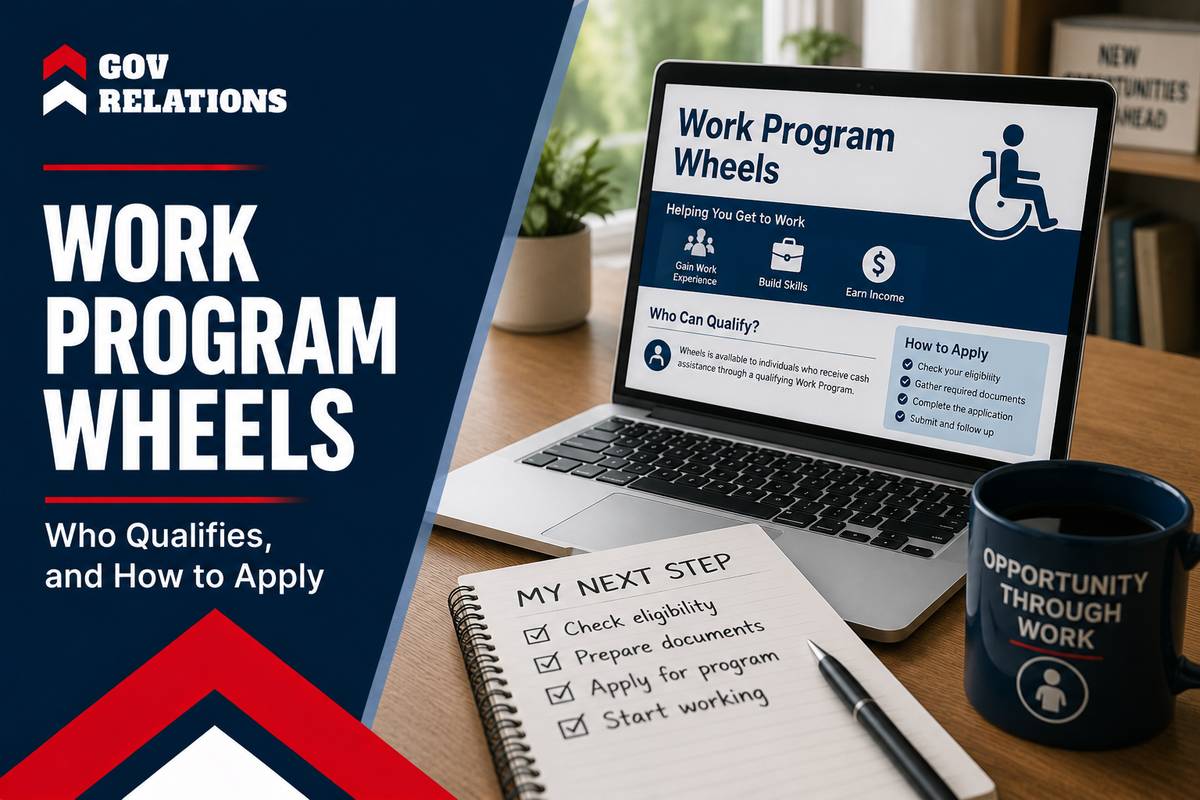
The Wheels for Work program is a group of local and state initiatives that help low-income workers get reliable transportation to a job, either through a free or repaired car, a low-interest auto loanA sum of money borrowed that is expected to be paid back with interest., or a subsidized ride. If you work or have a written job offer, live on a low income, and hold a valid driver's license, you likely qualify for a version of it in your area.
Transportation is one of the strongest predictors of holding a job. Low-income families with a car were twice as likely to find work and four times as likely to stay employed, according to the Urban Institute.
This guide explains what the Wheels for Work program covers, who qualifies, and the exact steps to apply.
Key Takeaways
- Four program models: Wheels for Work programs deliver help as donated cars, vehicle repair grants, low-interest auto loans, or subsidized ride and moped schemes.
- Employment is the core rule: Most programs require you to be working, starting a job, or in job training, usually for at least 20 hours a week.
- Income caps apply: Eligibility often runs up to 200% of the Federal Poverty Level, which is $66,000 a year for a family of four in 2026.
- A car pays for itself: Dutchess County, New York saves $1,614 per month for every family that gets a car and leaves temporary assistance.
- Referral is often required: Many donated-car programs accept applicants only through a caseworker, county agency, or partner nonprofit, not a public form.
- Scams target this search: No real program charges an upfront fee to release a free car, so treat any such demand as fraud.
What Is the Wheels for Work Program?
The Wheels for Work program is not a single federal program. It is a shared name for local nonprofit and county efforts that remove the transportation barrier between a low-income worker and a steady paycheck. Some awardA general term for funds provided to an individual or organization to support a specific purpose or ... refurbished cars, some fund repairs, and some offer low-interest loans.
The idea started with a simple problem. Many jobs sit in suburbs or rural areas that public transit does not reach, and shift work rarely lines up with bus schedules. A worker without a car can lose a job over a single missed shift. Wheels for Work programs close that gap by putting a reliable vehicle within reach of people who cannot buy one on their own.
Programs run under this banner are operated by organizations you may already know. Goodwill runs Wheels for Work programs in several regions. Others are run by United Way chapters, Good News Garage, community action agencies, and county departments of family services. Two terms come up in nearly every program, so it helps to define them now.
- TANF (Temporary Assistance for Needy Families): The federal cash-assistance program for low-income families. Many Wheels for Work programs use TANF funds and accept people already enrolled in it.
- FPL (Federal Poverty Level): The income yardstick that decides who qualifies for most need-based aid. Programs usually set their cutoff at 150% or 200% of this figure.
Who Qualifies for a Wheels for Work Program?
You generally qualify for a Wheels for Work program if you are employed or have a written job offer, earn a low income, hold a valid driver's license, and do not already own a running vehicle. Exact rules change by county and operator, but these conditions appear in almost every program.
You may qualify if you meet these conditions:
- You are working, starting a job, or in job training. Many programs ask for a minimum of 20 hours a week or a verifiable job offer. Some also accept full-time students.
- Your income is low. Most programs cap eligibility at 150% to 200% of the Federal Poverty Level, or accept people who already receive TANF, SNAP (Supplemental Nutrition Assistance Program), or MedicaidA joint federal and state program that helps with medical costs for some people with limited income ....
- You live in the service area. These are local programs. You must usually be a resident of the county or region the program serves.
- You hold a valid driver's license. A clean or near-clean record is common. Some programs bar recent DUIs or multiple moving violations within a set period.
- You do not own a working car. Donated-vehicle programs are meant for people with no reliable transportation, so a running vehicle in the household can disqualify you.
The income math is worth doing before you apply. In 2026, the Federal Poverty Level is $15,960 for one person and $33,000 for a family of four in the 48 contiguous states, per the federal poverty guidelines published by the Department of Health and Human Services. A program that caps eligibility at 200% of that level would accept a family of four earning up to $66,000 a year.
If your transportation need is tied to a disability, the eligibility picture is different and often more generous, since some programs fund vehicle modifications and adapted driving equipment.
What Are the Four Types of Wheels for Work Programs?
Wheels for Work programs come in four main forms: donated vehicles, repair grants, low-interest loans, and subsidized ride or moped schemes. The right one depends on whether you already own a car and whether you can manage a small monthly payment. The table below compares all four.
| Program Model | What You Receive | Best Fit For | Example Program |
|---|---|---|---|
| Donated vehicle | A refurbished car, inspected and repaired, awarded to you | Workers with no running car in the household | Good News Garage (New England); Goodwill |
| Vehicle repair grantA sum of money given by a government or other organization for a particular purpose, usually without... | Funds to fix a car you already own so it stays road-safe | Owners of a car that needs repair to keep working | Accord Corp (Allegany County, NY); NY OTDA Transportation Initiative |
| Low-interest auto loan | 0% to low-interest financing to buy a car, which also builds credit | Workers who can make a small monthly payment | SWCAP Work 'n Wheels (Wisconsin), 0% up to $7,500 |
| Ride or moped scheme | Subsidized rides to work or a low-cost scooter or bike hire | Areas with little or no public transit | Wheels to Work schemes; local ride programs |
If your car runs but you cannot afford a repair, the grant route is usually faster than waiting for a donated vehicle.
How Do You Apply for a Wheels for Work Program?
Applying takes six steps: find your local program, confirm the eligibility rules, gather your documents, secure any required referral, submit the application, and complete any training the program requires. Because programs are run locally, the exact process changes by county, but the sequence below holds almost everywhere.
Before you start, pull together the documents most programs ask for: photo ID and a valid driver's license, proof of income (recent pay stubs or a benefits letter), proof of employment or a written job offer, proof of residency, and, for repair grants, proof of insurance and the vehicle title.
- Find your local program. Search your county name plus "Wheels for Work," call your local community action agency, or dial 211 to reach the United Way helpline that connects you to nearby transportation aid.
- Confirm the eligibility rules. Read that specific program's income cap, work-hour minimum, and residency requirement before you spend time on paperwork you may not need.
- Gather your documents. Use the checklist above. Having everything ready in one folder is the single biggest thing that speeds up a decision.
- Get any required referral. Several donated-car programs, including Good News Garage and Vehicles for Change, take applicants only through a caseworker or partner agency. Ask who can refer you.
- Submit and complete required training. Many programs ask you to build a household budgetA detailed financial plan outlining the projected costs of the project, including personnel, equipme... with staff and finish a short car-care or defensive-driving class before you receive the vehicle.
- Follow up, and know your options if denied. Waitlists are common. If you are turned down, ask why, fix what you can, and apply to a second program in a nearby county rather than waiting on one list.
What Does a Wheels for Work Program Actually Deliver?
A Wheels for Work vehicle changes both employment and household finances, and county data shows the return is measurable. Recipients keep jobs longer, earn more, and leave public assistance, which saves counties money on the programs those families no longer need.
Dutchess County, New York, runs one of the longest-tracked versions, now called Way to Work and formerly named Wheels to Work. According to Dutchess County, the program has served more than 3,500 families and awarded 927 cars since 2001, and 90% of recipients have stayed off temporary assistance. The county estimates it saves $1,614 per month for every family that gets a car and no longer needs that aid.
New England's Good News Garage shows the human side of those numbers. The nonprofit has awarded nearly 6,000 refurbished cars since 1996, and among clients surveyed, 70% said the car helped them get a better job, and 56% stopped receiving government assistance other than food support. Demand keeps climbing: the group reported awarding its 80th vehicle of 2025 as used-car prices held near record highs.
Sabrina Jaar Marzouka, Commissioner of the Dutchess County Department of Community and Family Services, frames these vehicles as a path to self-sufficiency rather than a handout, noting that recipients earn them through months of work and training. That framing matches what the outcome data shows: a car is less a gift than a tool that lets a working parent hold a schedule, reach a childcare provider, and pick up more hours.
Which Wheels for Work Programs Operate Across the Country?
Wheels for Work programs run under many names and in many states, from donated-car nonprofits in the Northeast to 0% loan programs in the Midwest. The table below lists established examples so you can see which model operates near you.
| Program | Where | Model | Notable Detail |
|---|---|---|---|
| Good News Garage | Massachusetts and Vermont | Donated cars and transportation services | Nearly 6,000 vehicles awarded since 1996 |
| Work 'n Wheels (SWCAP) | Wisconsin | 0% auto loans | Loans up to $7,500; more than 1,150 issued |
| Accord Corp Wheels for Work | Allegany County, NY | Repair grants | Repair cost capped against vehicle value |
| Way to Work (formerly Wheels to Work) | Dutchess County, NY | Donated cars | 927 cars, 3,500+ families since 2001 |
| Wheels of Success | Florida | Donated cars | Serves working poor, veterans, and foster youth |
| United Way of Story County | Iowa | Donated cars | Has placed vehicles with 80+ families |
Some states channel Wheels for Work help through public agencies rather than nonprofits. New York, for example, funds car repairs and other transportation aid for TANF-eligible residents through the Office of Temporary and Disability Assistance (OTDA) Transportation Initiative. Check with your state or county human-services office to see whether a similar program runs where you live.
Scam Warning: How to Spot a Fake Free-Car Offer
Fraudsters target people searching for free cars and Wheels for Work help. Before you hand over any information, here is how to tell a real program from a scam.
- The real program never charges a fee to release a car. Any site or person asking for an upfront payment, a deposit, or a gift card to "unlock" a free vehicle is running a scam.
- Official information comes from a .gov site or an established nonprofit. Verify the organization's real web address before you apply. A lookalike URL that copies a program name is a warning sign.
- No legitimate program asks for your credit card to claim a free car. If an offer requires payment details to receive assistance, stop and walk away.
- Unsolicited "free government car" calls and texts are fraud. Real programs do not cold-call you to award a vehicle you never applied for.
If you receive a suspicious offer, do not click any links in the message. Report it to the Federal Trade Commission (FTC) at ReportFraud.ftc.gov.
Find the Right Transportation Help for Your Situation
The Wheels for Work program can be the difference between losing a job and building a stable income. If you are working or ready to start, earn a low income, and hold a valid license, a donated car, a repair grant, or a low-interest loan is likely within reach. As of 2026, with used-car prices still high and transit gaps unchanged, these programs matter more than ever.
Start by identifying which model fits your situation, then find the program that serves your county. Your first move is to compare every transportation option in one place on our car assistance programs hub, then contact the program that matches your need and gather your documents so you are ready to apply the day a spot opens.
Need additional options for purchasing a reliable vehicle? Read our guide to grants to buy a car in 2026 to compare legitimate government, state, nonprofit, and charity programs and learn how to apply.
Frequently Asked Questions
Is the Wheels for Work program a federal government program?
No. There is no single federal Wheels for Work program. It is a shared name for local nonprofit and county programs that help low-income workers get transportation. Some use federal TANF funds, but the programs are run and administered locally, so eligibility and benefits differ from one county to the next.
Can I get a free car from Wheels for Work if I am unemployed?
Usually you need a job, a written job offer, or enrollment in job training to qualify, because the programs exist to support employment. A few programs accept full-time students. If you are unemployed and job hunting, contact your local community action agency first, since some offer interim ride assistance while you search.
How long is the waitlist for a Wheels for Work car?
Waitlists vary widely and can run from a few weeks to many months, because demand outpaces the supply of donated vehicles. To improve your odds, apply to more than one program in your region, keep your documents current, and ask each program to confirm your place on its list in writing.
What if I already have a car but cannot afford the repair?
Apply for a vehicle repair grant instead of a donated car. Programs like Accord Corp in New York and state transportation initiatives fund repairs so an existing car stays road-safe. Repairs are often capped as a share of the vehicle's value, and you may need to show proof of insurance and provide multiple estimates.
Does a past DUI disqualify me from a Wheels for Work program?
It can, but not always. Many programs require a valid license and review your driving record, and some bar recent DUIs or multiple moving violations within a set window, such as the past three years. Rules differ by program, so ask the specific operator about its record requirements before you assume you are ineligible.