

Let's explore how the Solar Tax Credit benefits new home construction. Allowing homeowners to deduct 30% of solar installation costs from federal taxes greatly reduces expenses. But how exactly does it apply to newly built homes, and what are the steps to claim it? We'll uncover the eligibility criteriaThe specific requirements and conditions that applicants must meet to qualify for a grant., calculate savings, and touch on how solar technology impacts home value. Curious about maximizing these savings?
Key Takeaways
- The Solar Tax Credit allows new home constructions to receive a 30% deduction on solar installation costs from federal taxes in 2023.
- Eligibility requires the solar system to be installed on a primary or secondary residence, not on rental properties.
- Homeowners must own the solar panels; leased systems do not qualify for the tax credit.
- The solar installation must be new, comply with codes, and be operational before claiming the tax credit.
- Use IRS Form 5695 to claim the credit and consult a tax professional for proper filing.
Overview of the Solar Tax Credit
The Solar Tax Credit, also known as the Investment Tax Credit (ITC), provides a significant financial incentive for homeowners considering solar energy systems.
By allowing us to deduct a portion of the cost of installing a solar system from our federal taxes, the ITC reduces the overall expense.
It's vital to understand that this credit directly reduces the amount of income tax we owe, which maximizes our savings.
As of now, the ITC offers a 30% credit for systems installed in 2023. This means if our solar installation costs $20,000, we could potentially save $6,000.
This initiative aims to encourage the adoption of renewable energy, making solar power more accessible and attractive for those of us considering sustainable home improvements.
Eligibility Criteria for New Builds
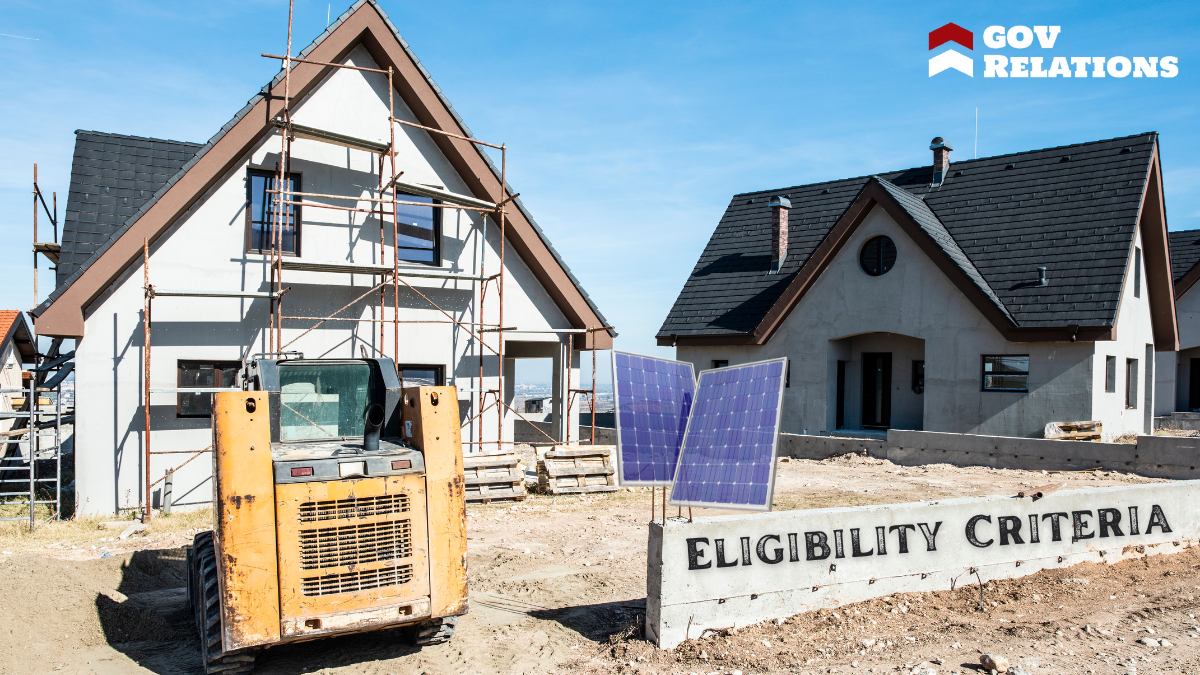
When planning to incorporate solar energy systems into our new home construction, we must be aware of specific eligibility criteria to qualify for the Solar Tax Credit.
First, the solar energy system needs to be installed in our primary or secondary residence within the United States. Importantly, rental properties don't qualify.
Also, we must own the home and not lease the solar panels. The system should be new or haven't been used previously to guarantee it's eligible.
Our solar installation must meet applicable fire and electrical code requirements. Additionally, the installation has to be complete and operational before claiming the credit.
Understanding these criteria guarantees we can take full advantage of the Solar Tax Credit, making our new home more energy-efficient and cost-effective.
Calculating the Solar Tax Credit for New Homes
To accurately calculate the Solar Tax Credit for our new home, we begin by determining the total cost of the solar energy system. This includes all expenses related to purchasing and installing the system.
Once we have the total cost, we apply the current federal tax credit percentage to find our potential tax savings. It's essential to keep detailed records and receipts to guarantee accuracy when filing taxes.
Here are steps to simplify our calculation:
- Gather all invoices: Include costs for equipment, installation, and permits.
- Calculate the total cost: Add up all invoices for the complete system.
- Apply the credit rate: Use the current federal percentage for solar tax credits.
- Consult a tax professional: Confirm everything is correctly documented and filed.
Following these steps helps us maximize our savings.
Benefits of Incorporating Solar in New Construction
When we build new homes with solar panels, we're not just reducing our energy bills but also boosting the property's market value.
Solar energy systems offer us long-term savings by cutting electricity costs, which can be a significant financial relief.
Plus, homes equipped with solar power are often more attractive to buyers, potentially increasing our return on investment.
Energy Cost Savings
Incorporating solar energy into new home construction presents a considerable opportunity for energy cost savings. By harnessing the sun's power, we can drastically reduce our monthly utility bills.
Solar panels convert sunlight into electricity, providing us with a renewable energy source right at home. This not only cuts costs but also offers a consistent energy supply.
Let's explore the benefits:
- Reduced Electricity Bills: Solar energy considerably lowers or even eliminates monthly electricity expenses.
- Energy Independence: We're less reliant on fluctuating grid prices and potential outages.
- Environmental Impact: Utilizing solar decreases our carbon footprint, contributing to a healthier planet.
- Long-term Savings: Over time, the initial investment in solar pays off through substantial savings on utility costs.
Solar power offers a practical solution for sustainable, cost-effective living.
Increased Property Value
Beyond the immediate savings on energy costs, solar panels also greatly enhance a home's market value. When we incorporate solar into new construction, we're not just investing in energy efficiencyRequirements for projects that promote energy conservation and efficiency. but also increasing the property's worth.
Prospective buyers see solar as a desirable feature, translating into higher offers and quicker sales. In many markets, homes with solar installations command a premium because they promise lower utility bills and a smaller carbon footprint.
Furthermore, solar panels contribute to a home's modern appeal, attracting environmentally conscious buyers. By integrating solar from the outset, we can maximize these benefits, ensuring the property stands out.
As we navigate the housing market, let's remember that solar isn't just a smart choice for us—it's a strategic investment in our home's future value.
Steps to Claim the Solar Tax Credit

To claim the solar tax credit for our new home, we first need to guarantee our property is eligible under current guidelines.
Next, we'll gather the necessary documentation, like installation receipts and manufacturer certifications, to support our claim.
Finally, we'll calculate the tax credit amount so we can accurately complete our tax forms.
Eligibility for New Homes
When exploring the eligibility for claiming the solar tax credit on new homes, understanding the specific criteria is vital.
We must guarantee the solar energy system is installed on a property we own and use as a residence. The credit also applies if we purchase a home with a newly installed system. Our contractor must commence construction by the deadline to qualify.
It's important that the system meets IRS guidelines and is operational by year-end. Here are the key points:
- Ownership: We must own the system and the new home.
- Primary Residence: It must be used as a primary or secondary residence.
- System Installation: Installation should be complete by the year's end.
- IRS ComplianceAdherence to the rules, regulations, and requirements set forth by the grantor, ensuring proper use ...: The system must meet IRS requirements.
Required Documentation Process
How do we guarantee our claim for the solar tax credit is processed smoothly?
First, we must gather all necessary documentation. This includes the receipts and contracts related to the purchase and installation of our solar system. We should also obtain a Manufacturer's Certification Statement, which verifies the system qualifies for the credit.
Next, let's make sure we've Form 5695, Residential Energy Credits, which we'll need to complete when filing our taxes. Keeping organized records is essential, so let's maintain a file with all pertinent documents.
If we're unsure about any paperwork, consulting a tax professional can provide clarity. By following these steps, we can confidently submit our claim and maximize our tax credit benefits without unnecessary delays.
Tax Credit Calculation
Now that we've gathered all necessary documentation, let's figure out how to calculate the solar tax credit accurately. The credit is based on a percentage of the cost of the solar energy system, so it's essential to get this right.
Here's how we can do it:
- Determine the total cost: Include equipment and installation fees.
- Apply the credit percentage: For 2023, the federal tax credit is 26% of the total cost.
- Claim the credit: Use IRS Form 5695 when filing taxes.
- Check state incentives: Some states offer additional credits or rebates.
Common Misconceptions About the Solar Tax Credit
Many people misunderstand the solar tax credit, leading to missed opportunities and confusion. One common misconception is that the credit only applies to existing homes. In reality, it also benefits new home construction, allowing builders to incorporate solar systems from the start.
We might also hear that the credit covers the entire cost of installation, but it actually covers a percentage, which varies over time.
Some folks think the credit applies only to solar panels. However, it extends to other solar equipment, like inverters and batteries.
Another misunderstanding is that leasing or using solar power purchase agreements (PPAs) qualifies for the credit. In truth, only those who purchase and own the system can claim it.
Let's clarify these points to maximize our benefits.
Impact on Home Value and Resale Potential
When contemplating the impact of solar installations on home value and resale potential, it's crucial to understand the financial benefits they bring.
Solar panels can increase a home's market value and appeal to eco-conscious buyers. We should recognize that homes equipped with solar panels often sell faster and at higher prices. This rise in value is thanks to reduced energy costs and growing demand for sustainable living options.
Here are some key points to reflect on:
- Increased Market Value: Homes with solar panels can command higher selling prices.
- Faster Sale: Solar-equipped homes often sell quicker due to increased buyer interest.
- Energy Savings: Reduced utility bills are attractive to potential buyers.
- Environmental Appeal: Solar homes support a sustainable lifestyle, aligning with modern values.
Future of Solar Tax Incentives in Home Building
As we consider the benefits solar panels bring to home value, let's explore how tax incentives play a role in the future of solar adoption in new home construction.
Solar tax credits have been instrumental in encouraging homeowners and builders to embrace renewable energy. With federal incentives set to decrease in the coming years, the landscape may shift.
However, states might introduce their own incentives to keep momentum strong. It's essential for us to stay informed about legislative changes that could impact the cost and accessibility of solar technology.
Tips for Builders and Homeowners to Maximize Savings
To make the most of solar tax credits and maximize savings, builders and homeowners should first conduct thorough research on available incentives. Understanding local, state, and federal benefits can greatly reduce costs.
By planning early in the construction phase, we can guarantee the home design optimizes solar energy efficiency. Collaborating with experienced solar contractors can provide valuable insights and help avoid common pitfalls.
Here are some tips to keep in mind:
- Compare solar systems: Evaluate different solar panel options for efficiency and cost-effectiveness.
- Monitor policy changes: Keep an eye on any updates to tax credit policies that could impact savings.
- LeverageThe use of borrowed capital (debt) to increase the potential return of an investment. additional incentives: Explore grants or rebates that may complement the federal tax credit.
- Document everything: Maintain thorough records of all expenses to guarantee proper tax credit claims.
Conclusion
To summarize, we've seen that the Solar Tax Credit offers great opportunities for new home construction. By understanding the eligibility criteria and calculation methods, we can maximize savings and boost property value. Let's not overlook the additional benefits like energy efficiency and resale potential. As we look to the future, staying informed about solar incentives will help us make the most of these advantages. Together, we can embrace sustainable building practices and enjoy the financial rewards.




