There is no single national program that gives free solar panels for veterans to everyone who served. That is the honest answer, and it matters because the phrase gets searched constantly and scam sites use it as bait. What does exist is a mix of nonprofit installers, VA financing, state rebates, and military discounts that can drop the cost of solar to zero for some veterans and cut it sharply for others.
Veterans already hold roughly 20,000 of the 250,000 jobs in the U.S. solar industry, according to solar workforce data reported by SolarReviews, so the link between military service and solar runs deep. This guide covers every real program, who qualifies, and the exact steps to apply.
Key Takeaways
- No universal federal program: No national benefit hands free solar panels for veterans to everyone who served. Real help comes from nonprofits, VA financing, and state rebates.
- Nonprofits install at no cost: Solar for Soldiers and GRID Alternatives provide no-cost systems to veterans who meet specific income or medical-need criteria.
- Income is the main gate: GRID Alternatives requires household income at or below 80% of Area Median Income, verified through your most recent tax return.
- The VA finances it; it does not buy: The VA Energy Efficient Mortgage lets you roll solar costs into a VA loanA sum of money borrowed that is expected to be paid back with interest., up to $6,000 without a refinance loan.
- The 30% tax credit is gone: The federal Residential Clean Energy Credit ended for systems placed in service after December 31, 2025.
- Discounts still apply: Companies like Moxie Solar and Revision Energy offer veteran discounts ranging from $500 to $1,000 off a system.
- Scams target this exact search: Any offer that asks for payment, a deposit, or your card number to claim free solar is fraudulent. Walk away.
Is There a Federal Program That Gives Veterans Free Solar Panels?
No. As of 2026, no federal agency runs a program that installs free solar panels for veterans nationwide. The Department of Veterans Affairs (VA) does not buy or give away solar systems. The real no-cost options come from private nonprofits, and the real discounts come from state programs and solar companies, not from a single government benefit.
The myth persists for two reasons. First, the federal government did offer a strong solar incentive for years, so people assume it still exists. Second, fraudulent sites deliberately use the phrase to collect personal information from people who served. Knowing what is real protects you on both counts.
The biggest 2026 change is the end of the federal tax credit. The Residential Clean Energy Credit let homeowners deduct 30% of a solar system's cost from their federal taxes. Under the One Big Beautiful Bill Act, signed July 4, 2025, that credit ended for any system placed in service after December 31, 2025. Homeowners who buy in 2026 no longer get it, which makes nonprofit and state programs more valuable for veterans than they were a year ago.
Nonprofit Programs That Install Solar at No Cost
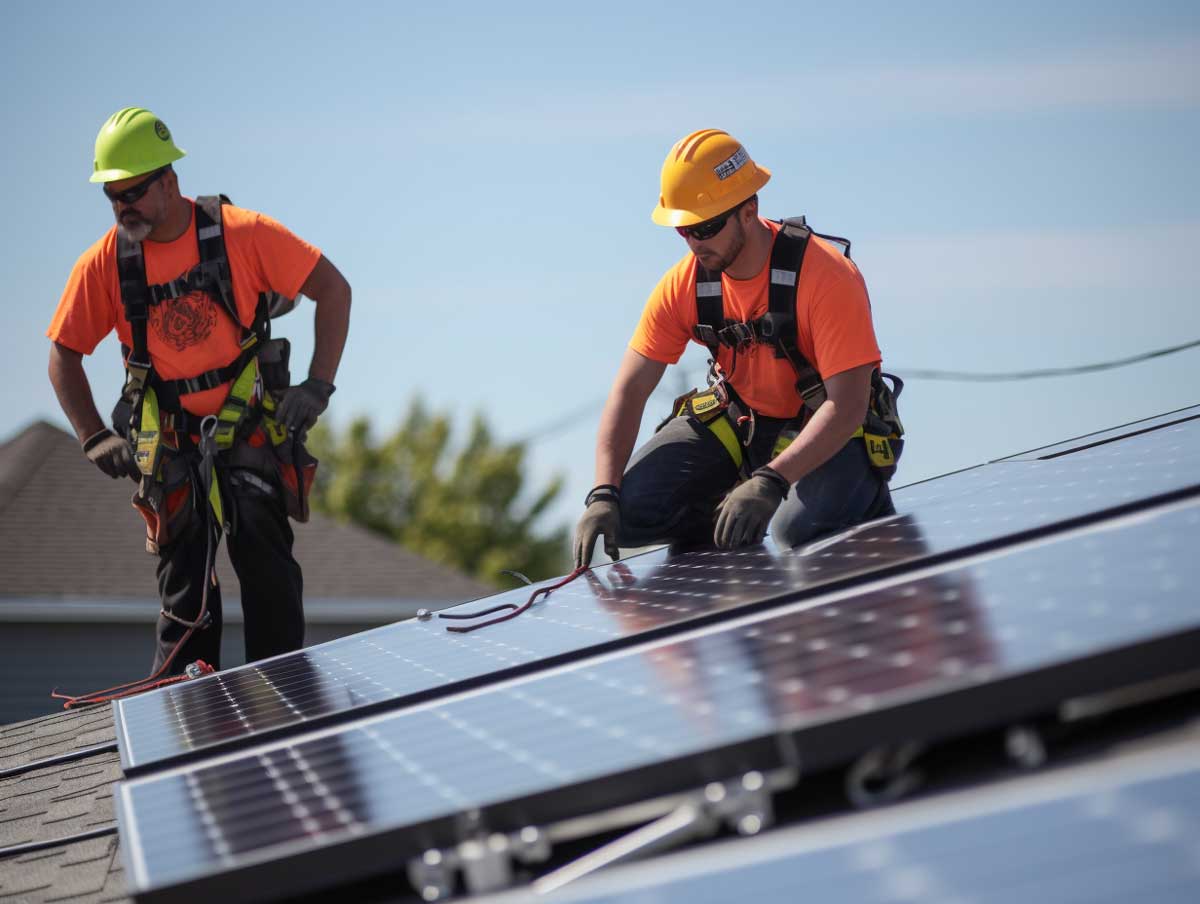
Two nonprofits do the closest thing to truly free solar. Solar for Soldiers focuses on veterans directly. GRID Alternatives serves all low-income homeowners, which includes many veterans. Both install the system at no cost to the homeowner, and neither leaves you with debt. Each one has its own rules, so check both.
Solar for Soldiers
Solar for Soldiers is a 501(c)(3) nonprofit that provides completely free solar energy systems to military veterans. The program covers the full system at no upfront cost and includes a 25-year performance guarantee, product warranties against manufacturing defects, and a real-time monitoringThe continuous or periodic assessment of project activities to ensure they are on track and achievin... platform. You qualify if you are a U.S. veteran from any service branch, you own a home with good sun exposure and adequate roof space, and you face high energy costs or financial need. Priority goes to veterans who rely on medical equipment or need consistent electricity for health reasons.
One important detail for 2026: as of June 2026, Solar for Soldiers is awaiting final IRS nonprofit approval and is accepting applications, but installations are not yet being scheduled. Apply if you fit the criteria, but confirm the organization's status before you hand over sensitive documents like your DD-214 or Social Security number. Verifying first is simply good practice with any program that asks for personal records.
GRID Alternatives: Energy for All
GRID Alternatives runs the Energy for All program, which installs no-cost rooftop solar for families on limited or fixed incomes across more than 40 states. The main requirement is income-based: your household income must be at or below 80% of the Area Median Income (AMI), the midpoint income for your area as set by the U.S. Department of Housing and Urban DevelopmentEligibility for projects aimed at revitalizing urban areas and addressing urban-specific challenges..... GRID verifies this through your previous year's tax return. The organization handles the permits, inspections, and utility interconnection paperwork, and a typical install takes about two full days.
There are an estimated 20 million low-income, owner-occupied single-family homes in the United States, which is the pool GRID Alternatives works from. Many veterans on fixed incomes fall inside that 80% AMI line and never realize they qualify.
A Real Example: Semper Solaris
Nonprofit and company giveaways are not just theory. Through its Semper Cares Initiative, the California installer Semper Solaris gave U.S. Army Sergeant Angel Torres, who served from 2002 to 2015, a free roof and full solar system after neighbors nominated him. Cases like this are limited in number and often tied to nominations or specific events, so treat them as a real but narrow path, not a program you can count on by simply applying.
How Do the Main Free and Low-Cost Solar Options Compare?
The fastest way to find your path is to match your situation to the right program. The table below compares the main options veterans use, what each one provides, and what it costs you out of pocket.
| Program | Who It Serves | What You Get | Cost to You | Where |
|---|---|---|---|---|
| Solar for Soldiers | Veterans, active duty, military families with financial or medical need | Full rooftop system, 25-year performance guarantee, monitoring | $0 | Nationwide (homeowners) |
| GRID Alternatives (Energy for All) | Low-income homeowners at or below 80% AMI | No-cost rooftop install, permits and interconnection handled | $0 | 40+ states |
| California DAC-SASH | Income-qualified homeowners in disadvantaged communities | $3 per watt rebate, often covering most or all of the cost | $0 to low | California only |
| VA Energy Efficient Mortgage | Veterans with a VA home loan or refinance | Financing that rolls solar cost into the loan | Financed, not free | Nationwide |
| NY Statewide Solar for All | Low-income utility customers, including renters | Community solar bill credits, no install on your home | $0 | New York only |
| Private military discounts | Any veteran buying a system | $500 to $1,000 off plus near at-cost pricing | Reduced price | Varies by company |
VA and Federal Financing That Lowers the Cost of Solar
The VA will not pay for solar panels outright, but it gives you a way to finance them at a low rate. The Energy Efficient Mortgage (EEM), a feature that lets you fold energy-saving home improvements into a home loan, allows veterans to roll the cost of solar into a VA home loan or refinance. Solar panels and solar heating and cooling systems are eligible improvements. The amount you can finance depends on the cost, as shown below.
| Cost Tier | Financing Amount | Documentation Required |
|---|---|---|
| Tier 1 | Up to $3,000 | Contractor bid or quote itemizing costs and manufacturer information. |
| Tier 2 | $3,001 to $6,000 | Contractor bid plus an energy auditA systematic examination of financial records and project activities to ensure compliance with grant... or a year of utility cost averages proving cost-effectiveness. |
| Tier 3 | Over $6,000 | Only available with an Interest Rate Reduction Refinance Loan (IRRRL), with certification you can qualify for a higher payment. |
Improvements must be permanent to the property, and you usually have six months after closing to finish the installation. You can read the full process in this VA Energy Efficient Mortgage guide.
Two other federal programs help with energy costs even though they do not install solar. The Low Income Home Energy Assistance Program (LIHEAP) helps low-income households pay for heating, cooling, and emergency energy bills. The Weatherization Assistance Program (WAP) makes homes more energy efficient at no cost, and veterans who receive Supplemental Security Income (SSI) often qualify automatically.
State and Community Solar Programs Veterans Can Use
State programs are where some of the deepest discounts live, and a few cover the full cost. The two strongest examples are California's DAC-SASH rebate and New York's community solar program, but most states have some version of low-income solar support worth checking.
California's Disadvantaged Communities Single-family Solar Homes (DAC-SASH) program, administered by GRID Alternatives, pays $3 per watt to install rooftop solar for income-qualified homeowners in disadvantaged communities. To qualify, you must be enrolled in the California Alternate Rates for Energy (CARE) or Family Electric Rate Assistance (FERA) program, live in a designated disadvantaged community, and receive service from PG&E, SCE, or SDG&E. The rebate often covers most or all of the install cost, and the program runs through 2030.
If you rent, live in multi-family housing, or have a roof unsuited to panels, community solar is the option to know. Community solar lets you subscribe to part of a large off-site solar project and receive credits on your utility bill. New York's Statewide Solar for All program is free for eligible customers, who are automatically enrolled if they already take part in their electric utility's energy assistance program. You get a labeled credit on your regular bill and install nothing on your property.
Military Discounts and the 2026 Tax Credit Change
Veterans who earn too much for low-income programs can still cut the price through company discounts. These are not free systems, but the savings are real and stack on top of any state rebate you qualify for. Always ask about a military discount before you sign, because many companies do not advertise it.
- Moxie Solar (Watts for Warriors): $1,000 plus near-at-cost installation for active-duty, veteran, and reserve members.
- Revision Energy (Solar Salute): $500 off a photovoltaic system and $250 off thermal energy systems, with a one-lifetime maximum on each.
- Petersen Dean: $500 off panels when a household member is active-duty or a veteran, also extended to first responders and people over 50.
- Semper Solaris, American Solar, Solar Optimum: Known for veteran discounts or veteran-focused installs. Ask each one directly during the quote.
The 2026 tax landscape changed the math. The 30% Residential Clean Energy Credit expired for systems placed in service after December 31, 2025, so a veteran buying a system with cash or a loan in 2026 gets no federal credit. There is one narrow exception. Third-party ownership, meaning a solar lease or power purchase agreement (PPA) where a company owns the panels on your roof, can still qualify under the separate commercial credit through 2027.
The provider may pass part of that value back to you as a lower monthly rate, so it is worth asking about if buying outright is off the table.
How to Apply for Free or Discounted Solar as a Veteran
The path is the same whether you are aiming for a free nonprofit install or a discounted purchase. Follow these steps in order so you do not waste time on a program you cannot qualify for.
- Check your income. Compare your household income to 80% of your Area Median Income. If you are at or below it, nonprofit programs are open to you.
- Confirm your home qualifies. You generally need to own your home, and your roof needs good sun, enough space, and sound condition for a rooftop install.
- Apply to the right nonprofit. Use Solar for Soldiers if you want a veteran-specific program, or GRID Alternatives if you qualify on income alone.
- Get installer quotes if you do not qualify for free solar. Ask every company about military discounts and collect at least three written quotes to compare.
- Look up your state and utility programs. Search for low-income solar in your state, such as DAC-SASH in California or community solar in New York.
- Ask your VA lender about the EEM. If you own a home and want to finance, your VA lender can fold solar costs into the loan through the Energy Efficient Mortgage.
- Gather your documents. Have your DD-214, last year's tax return, recent utility bills, and proof of homeownership ready before you apply.
Scam Warning: How to Spot Fake “Free Solar for Veterans” Offers
This exact search attracts scammers, so read this before you apply anywhere. Fraudulent sites copy the look of real nonprofits and government pages to collect your Social Security number, DD-214, or payment. Here is how to tell a real program from a fake one.
- Real programs never charge a fee to apply. If a site or person asks for money to submit your application, it is not a legitimate program.
- No real program asks for a deposit or your card to reserve panels. Any request for payment to claim free assistance is fraud.
- The government will not contact you out of the blue. Unsolicited calls, texts, or emails offering free solar you never applied for are a scam.
- Verify nonprofit status before sharing records. Check that an organization is a registered nonprofit before you send your DD-214 or Social Security number.
If you receive a suspicious offer, do not click any links in the message. Report it to the Federal Trade Commission.
Solar Careers for Veterans: The Solar Ready Vets Pathway
Solar is also a career, not just a home upgrade. The Department of Energy launched the Solar Ready Vets effort, led by the Interstate Renewable Energy Council (IREC), to connect transitioning service members with solar jobs. The Solar Ready Vets Network operated from 2019 through October 2025, and it helped push veterans into roughly 20,000 of the industry's 250,000 jobs.
Training pathways for veterans continue beyond that network. Solar Energy International (SEI) still runs a Solar Professionals Certificate Program that accepts Veterans Education Benefits, giving service members the practical skills to enter the solar workforce. The skills the military builds, such as discipline, logistics, and technical work in demanding conditions, translate directly into solar installation, sales, and project management roles.
Your Next Step Toward Lower Energy Bills
A universal free-solar program for veterans does not exist, but a real network of nonprofits, state rebates, and financing options does. Solar for Soldiers and GRID Alternatives offer true no-cost installs for veterans who meet income or medical criteria. The VA Energy Efficient Mortgage, community solar, and company discounts cover everyone else. The one thing that changed in 2026 is the loss of the 30% federal tax credit, which makes these other programs more important than before.
Start by checking your household income against 80% of your local Area Median Income, then apply to the nonprofit that fits your situation and ask installers about veteran discounts. If transportation or utility costs are also stretching your budgetA detailed financial plan outlining the projected costs of the project, including personnel, equipme..., browse our wider library of veteran assistance programs, and find out VA grants that help veterans buy or repair a vehicle. One application could be the difference between rising bills and a paid-off system on your roof.
Frequently Asked Questions
Does the VA pay for solar panels?
No. The VA does not buy or install solar panels. It offers the Energy Efficient Mortgage, which lets you finance solar by rolling the cost into a VA home loan or refinance. You can finance up to $6,000 without a refinance loan, and more with an Interest Rate Reduction Refinance Loan.
Can disabled veterans get free solar panels?
Yes, some can. Solar for Soldiers gives priority to veterans who rely on medical equipment or need steady electricity for health reasons. GRID Alternatives serves any homeowner at or below 80% of Area Median Income, which includes many disabled veterans on fixed incomes. Both require that you own your home.
Is Solar for Soldiers legitimate?
Solar for Soldiers presents as a 501(c)(3) nonprofit and is accepting applications. As of June 2026, it is awaiting final IRS nonprofit approval, and installations are not yet being scheduled. Apply if you fit the criteria, but confirm the organization's current status before sharing sensitive documents.
Are there still solar tax credits in 2026?
Not for homeowners who buy a system. The 30% Residential Clean Energy Credit ended for systems placed in service after December 31, 2025. The only remaining federal path is third-party ownership, such as a lease or power purchase agreement, where the company that owns the panels may pass savings to you through a lower rate.
Do you have to own your home to get free solar?
For rooftop programs, usually yes, because the panels become part of the property. If you rent or live in multi-family housing, community solar is the alternative. Programs like New York's Statewide Solar for All give you bill credits from an off-site project with no installation on your home.