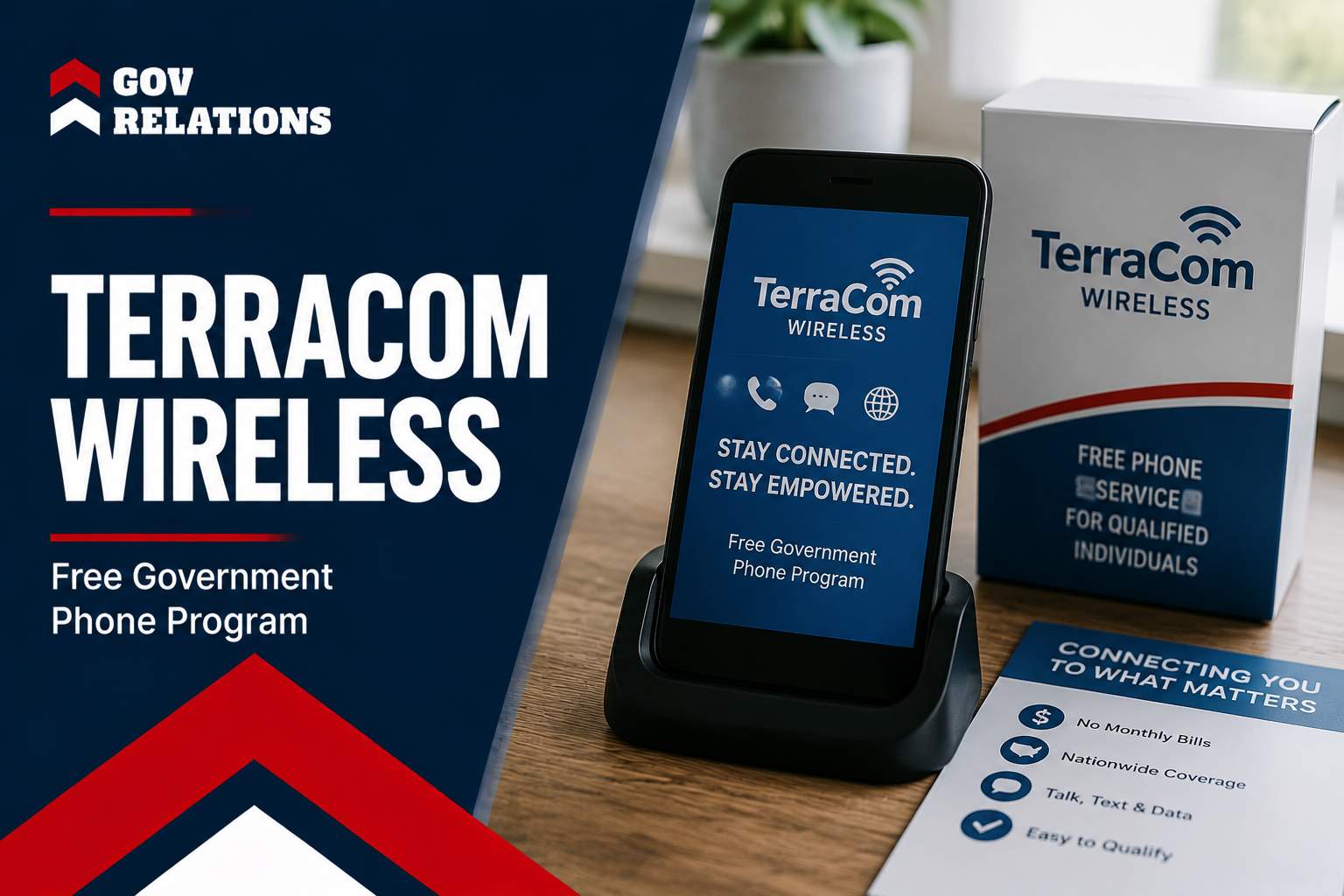
TerraCom Wireless is a phone company that provides free or low-cost cell service to low-income households through the federal Lifeline program. If you receive SNAP, MedicaidA joint federal and state program that helps with medical costs for some people with limited income ..., SSI, or Federal Public Housing Assistance, or your household income is at or below 135% of the Federal Poverty Guidelines, you likely qualify for a TerraCom Wireless phone at no monthly cost. The Lifeline benefit is worth up to $9.25 a month, and up to $34.25 a month if you live on Tribal lands, according to the Federal Communications Commission.
This guide explains what the service includes, who qualifies, exactly how to apply, how the company compares to other Lifeline providers, and how to spot the scams that target people looking for a free government phone.
Key Takeaways
- What it is: TerraCom Wireless is a licensed Lifeline provider that gives qualifying low-income households a free phone and a free monthly plan paid for by a federal subsidyFinancial assistance granted by a government to support a specific economic activity or sector, redu....
- Who qualifies: You qualify with income at or below 135% of the Federal Poverty Guidelines, or by joining SNAP, Medicaid, SSI, or Federal Public Housing Assistance.
- What you get: Eligible customers receive a free smartphone, free monthly minutes, unlimited texts, and a free data allowance that varies by state.
- One benefit per household: Federal rules allow only one Lifeline benefit per household, and you must reconfirm your eligibility every year.
- Ownership is changing: Control of TerraCom moved to Maxsip Tel in 2024, and SurgePays has agreed to buy a majority stake, pending regulatory approval.
- Check the record: TerraCom paid a $3.5 million federal settlement in 2015 and was denied entry to California LifeLine in 2025, so read reviews before you enroll.
What Is TerraCom Wireless?
TerraCom Wireless is a Mobile Virtual Network Operator, or MVNO, that sells government-subsidized and prepaid cell phone service. The company was founded in 2008 in Oklahoma City and is a licensed Lifeline provider. That means it can give qualifying low-income customers a free phone and a free monthly plan that a federal subsidy pays for.
An MVNO does not build or own cell towers. Instead, it buys access to the networks the big carriers already run and resells that service under its own name. TerraCom uses established nationwide networks to carry its calls, texts, and data, so its coverage depends on the partner network in your area.
The money behind a free TerraCom phone comes from Lifeline, a program the Universal Service Administrative Company runs for the FCC. For each eligible subscriber, a Lifeline carrier receives a federal reimbursementThe process of compensating the grantee for expenses incurred, usually requiring documentation and p... of $9.25 a month, or up to $34.25 a month for subscribers on Tribal lands. That subsidy is what lets the company offer a $0 monthly plan to people who qualify.
To collect that funding in a given state, a carrier must hold Eligible Telecommunications Carrier status, often shortened to ETC. TerraCom holds ETC status in a long list of states, including Oklahoma, Arizona, New York, Kentucky, South Carolina, and Utah, and each state sets its own rules that the company has to follow.
Who Qualifies for TerraCom Wireless Free Phone Service?
You qualify for TerraCom Wireless free service in one of two ways: by income or by program. You qualify by income if your household earns at or below 135% of the Federal Poverty Guidelines. You qualify by program if you or someone in your household takes part in a qualifying federal assistance program.
According to USAC consumer eligibility rules, you qualify if you participate in any of these programs:
- SNAP (Supplemental Nutrition Assistance Program, formerly food stamps)
- Medicaid (your state may use a different name, such as Medi-Cal in California)
- SSI (Supplemental Security Income)
- Federal Public Housing Assistance (including Section 8)
- Veterans Pension or Survivors Pension Benefit
- Certain Tribal assistance programs, if you live on qualifying Tribal lands
Two rules catch people off guard. First, only one Lifeline benefit is allowed per household, where a household means everyone living at one address who shares income and expenses. Second, your eligibility is not permanent. USAC checks every subscriber once a year, and automatic recertification checks for 2026 began on February 16, 2026. If the system cannot confirm you still qualify, it contacts you by email or mail, and you have to respond to keep your phone active.
Survivors of domestic violence or human trafficking who face financial hardship can qualify under a higher income limit of 200% of the Federal Poverty Guidelines for up to six months under the Safe Connections Act. This path protects the survivor's privacy and requires a line separation request.
What Do You Get With a TerraCom Wireless Plan?
A TerraCom Lifeline plan gives eligible customers a free smartphone plus a free monthly service plan. The exact phone model and the size of the data allowance change from state to state, because the subsidy and the partner network are not the same everywhere.
For Lifeline customers, the standard package usually includes:
- A free smartphone (model and availability vary by state)
- Free monthly voice minutes
- Unlimited text messaging
- A free monthly data allowance (the cap depends on your area)
TerraCom also sells products outside the Lifeline benefit. The company offers standard prepaid plans for people who do not qualify for assistance, broadband internet options, and top-up purchases that add minutes or data when you use up your free monthly amount. It also supports Bring Your Own Device, so you may be able to activate a phone you already own instead of taking the free handset.
One honest point matters here. The Lifeline benefit is smaller than the older Affordable Connectivity Program, which ended in 2024. As the Congressional Research Service notes, the $9.25 Lifeline subsidy is well below what the ACP offered, so it does not make home internet free for most households on its own. For a free phone with talk and text, though, the Lifeline subsidy is usually enough to cover a basic plan.
How to Apply for TerraCom Wireless Step by Step
You apply for TerraCom Wireless by confirming your Lifeline eligibility through the federal National Verifier, then enrolling with the carrier. The process is free, and you never pay to submit a Lifeline application. Follow these steps:
- Confirm you qualify. Check your eligibility through the National Verifier at lifelinesupport.org before you do anything else. This is the official federal system, and using it first saves you from wasted time.
- Gather your documents. Have proof of a qualifying program (such as a SNAP or Medicaid award letterAn official notification from the grantor indicating that the grant has been approved and outlining ...) or proof of income (such as a pay stub or tax return) ready to upload or mail.
- Check availability in your state. TerraCom does not operate in every state, and a 2025 ruling kept it out of California LifeLine. Confirm the company serves your state before you apply.
- Complete your application. Apply online, by mail, or directly through the provider. The National Verifier confirms your eligibility as part of this step.
- Choose your plan and device. Once approved, select the free Lifeline plan and the phone option offered in your state, or activate your own device if you prefer.
- Recertify every year. Respond to your annual recertification notice from USAC so your benefit does not lapse. Mark the date so you do not lose service.
How Does TerraCom Wireless Compare to Other Lifeline Providers?
TerraCom Wireless sits in a crowded Lifeline market led by a few large providers that run on the major carrier networks. The table below shows how TerraCom compares to three of the best-known names as of 2026, so you can weigh your options before you commit.
| Provider | Network | Strengths | What to watch |
|---|---|---|---|
| TerraCom Wireless | Multiple (MVNO) | Free device, free monthly plan, prepaid and broadband options | Below-average customer reviews, ownership in transition, denied entry to California LifeLine in 2025 |
| Assurance Wireless | T-Mobile | Wide coverage, large established subscriber base | Reports of long support waits |
| SafeLink Wireless | Verizon | Strong network quality, bring-your-own-phone friendly | Plan structures have changed in recent years |
| Q Link Wireless | T-Mobile | Previously offered high-data plans | Suspended from the Lifeline program |
Coverage is the deciding factor for most people. Because each provider rides a specific carrier network, the best choice is often the one whose underlying network is strongest where you live and work. Check the network column above against your own experience with the signal in your area.
TerraCom's Regulatory History and Ownership Changes
TerraCom has a track record worth knowing before you hand over your personal information. In 2015, TerraCom and its affiliate YourTel America, agreed to a $3.5 million settlement with the FCC, the agency's first data security case of its kind.
The FCC enforcement action found that a vendorAn individual or organization that provides goods or services to the project, often through a contra... stored the personal data of more than 300,000 consumers, including names, Social Security numbers, and driver's license numbers, in plain text on internet servers that anyone could reach with a search engine. The companies admitted the conduct violated federal law and agreed to notify affected customers, provide credit monitoringThe continuous or periodic assessment of project activities to ensure they are on track and achievin..., and follow a three-year complianceAdherence to the rules, regulations, and requirements set forth by the grantor, ensuring proper use ... program.
Ownership has shifted recently. Control of TerraCom moved to Maxsip Tel LLC, a change the FCC approved in July 2024. Then, in October 2024, the technology and telecom company SurgePays signed a Master Services Agreement with TerraCom and agreed to buy a majority stake in the company, subject to regulatory approval. SurgePays placed $1 million in escrow toward the purchase.
SurgePays framed the deal as a way to move its customers onto Lifeline after the ACP ended. As the company announced, Chairman and CEO Brian Cox said the agreement let SurgePays offer a government-subsidized program to its roughly 280,000 wireless subscribers who had lost ACP service.
The transition has not been smooth. In July 2025, the California Public Utilities Commission denied TerraCom's request to join the California Lifeline program. According to the CPUC resolution, the company failed to tell state regulators about the SurgePays agreement and had withdrawn a compliance plan from the FCC, which raised questions about its transparency. As of early 2025, TerraCom was not offering service in California at all. None of this means the company is illegitimate, but it is a reason to read current reviews and confirm service in your state before you enroll.
Is TerraCom Wireless Legit? What Customer Reviews Show
Yes, TerraCom Wireless is a real, FCC-licensed Lifeline carrier, not a scam. That said, customer reviews are mixed, and the company carries below-average ratings on consumer review platforms as of 2026. You should set expectations accordingly.
The most common complaints reported by customers include long hold times and hard-to-reach customer service, sudden service interruptions or disconnections, and billing disputes over unexpected or post-cancellation charges. Several reviewers describe full voicemail systems that made support unreachable.
Positive feedback exists, too. Many customers say enrollment was easy and are grateful for a free device and free connectivity they could not otherwise afford. The pattern is typical of low-cost Lifeline carriers: the free phone is welcome, but service and support can be inconsistent. Read recent reviews for your state, since experience varies with the underlying network.
How to Avoid Free Government Phone Scams
⚠ Scam Warning: Fake free government phone offers are common, and people searching for Lifeline service are a frequent target. The real program is run through licensed carriers and the federal government, and it is always free. Here is how to tell a legitimate offer from a fraudulent one.
- The application is always free. No legitimate Lifeline provider charges a fee to submit your application. Anyone asking for payment to enroll you is not part of the real program.
- Check eligibility at the official site. The federal application runs through the National Verifier at lifelinesupport.org. A site that uses a program name but is not the official portal should make you cautious.
- Never give a credit card to claim a free benefit. No government phone program asks for a credit card number to receive Lifeline service. Any offer that requires payment is fraudulent.
- Be wary of unsolicited offers. If someone contacts you out of the blue by phone, text, or email about a free government phone you never applied for, treat it as a scam and do not click any links.
- Protect your documents. You will need to prove eligibility, but share Social Security numbers and program letters only through a verified provider, given TerraCom's own 2015 data breach history.
If you receive a suspicious free phone offer, do not respond and do not click any links. Report it to the Federal Trade Commission at ReportFraud.ftc.gov.
Key Terms to Know
A few terms come up again and again in any free government phone guide. Here is what each one means in plain language.
| Term | What it means |
|---|---|
| Lifeline | A federal program that gives a monthly discount of up to $9.25 (up to $34.25 on Tribal lands) on phone or internet service for low-income households. |
| MVNO | Mobile Virtual Network Operator. A company that sells phone service on a larger carrier's network instead of building its own towers. |
| ETC | Eligible Telecommunications Carrier. The designation a company needs before it can receive Lifeline funding in a state. |
| National Verifier | The federal system, run by USAC, that checks whether you qualify for Lifeline and confirms it again each year. |
| Federal Poverty Guidelines | Income levels set by the federal government each year. Lifeline uses 135% of these guidelines as its income cutoff. |
| ACP | The Affordable Connectivity Program, a larger internet discount that ended in 2024. Lifeline is the federal program that remains. |
Is TerraCom the Right Lifeline Provider for You?
TerraCom Wireless is a legitimate way to get a free phone if you qualify for Lifeline, but it comes with caveats: mixed customer reviews, an ownership change still in progress, and a past data breach. The free device and plan are real, and for many low-income households, the value is worth the trade-offs. Just confirm the company serves your state, since a 2025 ruling kept it out of California.
As of 2026, your smartest move is to start with the federal system rather than any single carrier. Check your eligibility through the National Verifier, confirm which programs or income levels qualify you, then compare TerraCom against other Lifeline providers that operate in your state. Your next step: verify your eligibility today, and never pay a fee to claim a free government phone.
TerraCom is the only option. Review our guide to the best Lifeline service providers to compare coverage, plan allowances, device offers, and eligibility requirements before choosing a carrier.
Frequently Asked Questions
Is TerraCom Wireless really free?
For Lifeline-eligible customers, yes. The federal Lifeline subsidy of up to $9.25 a month (up to $34.25 on Tribal lands) covers a basic phone plan, so qualifying customers pay $0 a month. You only pay if you buy add-ons like extra data, or if you choose a non-Lifeline prepaid plan instead.
Who owns TerraCom Wireless?
Control of TerraCom moved to Maxsip Tel LLC, approved by the FCC in July 2024. In October 2024, SurgePays signed an agreement to acquire a majority stake, subject to regulatory approval. As of 2026, that ownership change was still working through the regulatory process.
What network does TerraCom Wireless use?
TerraCom is an MVNO, so it does not own its own towers. It buys access to established nationwide carrier networks and resells that service. Your coverage depends on the partner network serving your state, which is why signal quality varies by location.
Can I bring my own phone to TerraCom?
In many cases, yes. TerraCom supports Bring Your Own Device, which lets you activate a compatible phone you already own instead of taking the free handset. Check compatibility with the company before you apply so you know your phone will work on the network.
What happened to the Affordable Connectivity Program?
The Affordable Connectivity Program, or ACP, ended in 2024 when its federal funding ran out. Lifeline is the federal discount program that remains. The Lifeline benefit is smaller than the ACP was, but it still covers a basic phone or helps offset an internet bill for qualifying households.
Can I have more than one Lifeline phone?
No. Federal rules allow only one Lifeline benefit per household, where a household is everyone at one address who shares income and expenses. Signing up for a second Lifeline phone at the same address can put your benefit at risk, so stick to one.