Free car repair assistance programs are available across the United States through federal benefits, state grants, community action agencies, and nonprofit garages. If your car is essential for work, medical appointments, or caring for a family member, you may qualify for help, often without paying a fee to apply. According to a national survey by Jerry.ai, 58% of Americans cannot afford a $3,000 car repair, and 29% have taken on debt to pay for repairs in the past two years.
This guide explains every major program, who qualifies, exactly how to apply, and how to spot fake offers.
Key Takeaways
- Free help is real: Programs from FEMA, state agenciesState-level government departments that offer funding for local projects, programs, and initiatives ..., Community Action Agencies, and nonprofits cover full repairs, partial grants, or vouchers, with no fee to apply.
- Income is the main rule: Most programs require household income at or below 150% to 225% of the Federal Poverty Level, which means about $49,500 to $74,250 for a family of four.
- Dial 2-1-1 first: The United Way 211 helpline made over 19 million referrals in 2025 and is the fastest way to find local car repair help in your zip code.
- California pays up to $1,450: The state Consumer Assistance Program covers emissions repairs for income-eligible drivers, paid directly to a STAR test-and-repair station.
- Veterans have priority: Semper Fi & America's Fund, Keys to Progress, and the VA's Vocational Rehabilitation program fund repairs and modifications for service members and their families.
- Spot the scam early: Any offer that asks for a fee, a gift card, or your Social Security number to claim a car repair grantA sum of money given by a government or other organization for a particular purpose, usually without... is fraudulent. Report it to the FTC.
- Bring documents to the first call: Proof of income, vehicle title, valid driver's license, current insurance, and a written repair estimate are required by almost every program.
What Counts as Free Car Repair Assistance?
Free car repair assistance is any program that covers the cost of fixing your vehicle, in full or in part, without you paying for the application itself. The help comes in four formats: direct payment to a repair shop, a voucher you take to an approved mechanic, a discounted in-house shop run by a nonprofit, or a donated vehicle when your current car is past repair. Most of these programs are not single national grants. They are local programs funded by federal money, state money, or private donations.
That last detail matters. People often search for a single "government grant for car repairs" that does not exist as one program. Instead, you apply for the specific program that fits your situation, such as state emissions assistance, a Community Action Agency grant, or a nonprofit repair shop. Each one has its own income rules, paperwork, and waitlist. The good news is that you can apply to more than one at the same time.
This site is independent. We are not a government agency, and we do not charge readers anything. Every program named in this guide links to its official source so you can verify the rules yourself before you apply.
Who Qualifies for Free Car Repair Programs?
You qualify for most car repair assistance programs if your household income falls at or below 150% to 225% of the Federal Poverty Level, you own the vehicle in your name, you hold a valid driver's license, and the car is essential for work, school, medical care, or caring for a child or elderly family member. Some programs also require active employment or enrollment in a job training program.
Programs that focus on emissions repair, like California's Consumer Assistance Program, also require a failed Smog Check inspection on a registered vehicle. Veteran-focused programs require proof of service. Programs for single parents may require proof of dependent children. Always read the eligibility section of the specific program before you apply, because submitting the wrong paperwork is the most common reason an application is rejected.
The table below shows the most common income thresholds, what each one means for a household of four, and one example program that uses that threshold. Household size adjusts the dollar amount up or down.
| Program Threshold | Max Annual Income (Family of 4) | Example Program |
|---|---|---|
| 150% of Federal Poverty Level | Around $49,500 | The Lift Garage (Minneapolis) |
| 200% of Federal Poverty Level | Around $66,000 | Community Action Partnership of Hennepin County |
| 225% of Federal Poverty Level | Around $74,250 | California Consumer Assistance Program |
Source: Federal Poverty Level guidelines for 2026, applied to program thresholds from the California Bureau of Automotive Repair and the Community Action Partnership of Hennepin County. Thresholds adjust each year.
Which Programs Offer Free or Low-Cost Car Repair?
The strongest car repair programs fall into three buckets: federal benefits that allow funds to be used for transportation, state-run repair grants, and nonprofit repair garages or vehicle donation programs. The table below compares the most useful programs by who runs them, who qualifies, and what they typically pay.
| Program | Who Runs It | Typical Benefit | Best For |
|---|---|---|---|
| Temporary Assistance for Needy Families (TANF)A federal assistance program that provides temporary financial assistance to low-income families wit... | Federal funds, state-administered | Cash assistance that can fund repairs if a car is needed for work; Michigan pays up to $900 | Single parents and low-income families with children under 18 |
| FEMA Individual Assistance | Federal Emergency Management Agency | Pays to repair or replace a vehicle damaged in a declared disaster | Households hit by a federally declared flood, storm, or fire |
| California Consumer Assistance Program (CAP) | California Bureau of Automotive Repair | Up to $1,450 for emissions repairs on 1996 or newer vehicles; up to $1,100 on 1976 to 1995 models | California residents whose car failed a Smog Check |
| Community Action Agencies | Federally funded local nonprofits | Varies by county; vehicle repair grants for families at or below 200% of the Federal Poverty Level | Working families needing repairs to keep a job |
| Good News Garage | Nonprofit, New England | Donated, repaired vehicles awarded to qualifying families | Families in Vermont, New Hampshire, and Massachusetts |
| Vehicles for Change | Nonprofit, mid-Atlantic | Affordable vehicle ownership and full-service repair shop | Maryland, Virginia, and Washington D.C. residents |
| The Lift Garage | Nonprofit, Minnesota | Repairs at $25 per hour with parts at a 7.5% markup | Twin Cities-area residents at or below 150% of the Federal Poverty Level |
| Semper Fi & America's Fund | Veteran-focused nonprofit | Adaptive vehicle grants, repair funding, and fuel assistance for medical visits | Wounded, ill, or injured service members and families |
Most of these programs accept applications year-round but operate on a first-come, first-served basis. Funding is limited, so applying early in the month, or right after a new fiscal year begins, can shorten your wait.
How to Apply for Car Repair Assistance: A Step-by-Step Guide
Most car repair assistance programs follow the same basic application process. The fastest applications happen when you have every document ready before you call, because incomplete paperwork is the top reason applications stall. Follow these eight steps in order.
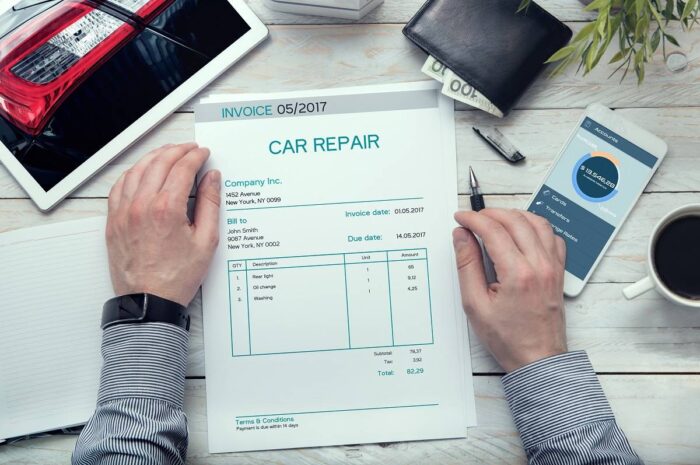
- Get a written repair estimate. Take your car to a licensed mechanic and ask for a written estimate that lists each repair, the cost of parts, and the cost of labor. Programs will not pay without this document.
- Dial 2-1-1 from any phone. Ask the specialist for "emergency vehicle repair assistance," "transportation vouchers," and "welfare-to-work car repair grants" in your zip code.
- Check state-specific programs. California residents apply to CAP. Michigan residents apply through Michigan Works! Service Centers. Arizona residents check the Voluntary Vehicle Repair Program for emissions-related help.
- Contact your local Community Action Agency. These local nonprofits often have repair grants for working families. Search "Community Action Agency" plus your county name.
- Gather your documents. You will need photo ID, proof of income (recent pay stubs or tax return), vehicle title, current registration, current auto insurance, and the written repair estimate from Step 1.
- Submit your application. Most programs accept online applications. If a program offers both online and mail options, online is faster.
- Follow up weekly. Funding is limited. A polite weekly call to confirm your application is being reviewed can move you up the list. Keep notes on who you spoke with and when.
- Take your car to an approved shop. Once your application is approved, the program will issue a letter of eligibility. Most programs pay the shop directly, so you bring the letter, not a check.
Some programs, like the Community Action Partnership of Hennepin County, also require applicants to complete a Financial Wellness WorkshopA training session or meeting organized to provide applicants with information and skills needed to ... before repairs are authorized. Workshop schedules vary by location, so check the agency website before applying.
Programs for Veterans, Single Parents, and Disabled Drivers
Several programs are built around specific groups whose needs are not fully met by general assistance. If you fit one of these categories, applying through a group-specific program can be faster than going through general intake.
Programs for Veterans and Military Families
Veterans have access to dedicated transportation help. Semper Fi & America's Fund provides adaptive vehicle grants, vehicle modifications, repair funding, and fuel assistance so wounded, ill, or injured service members can reach medical appointments. The Keys to Progress event each year donates vehicles and covers repair costs for veterans across the country. The VA's Vocational Rehabilitation and Employment program can also fund vehicle repairs for veterans with service-connected disabilities.
Programs for Single Parents and Caregivers
TANF can fund car repairs for parents who need a vehicle to commute to work or for required training. Each state runs its own TANF program, so the benefit varies. Hands of the Carpenter, a Colorado nonprofit, offers repairs at 50% of retail cost to single mothers with dependent children. The Next Level Church in Charlotte, North Carolina, provides free labor on minor repairs to single mothers, as long as the recipient supplies the parts.
Programs for Drivers with Disabilities
Drivers with disabilities have additional options. Free Charity Cars accepts donated vehicles, repairs them, and distributes them to qualifying disabled applicants. Opportunity Cars offers vehicles, vehicle loans, and repair assistance to families that include a disabled driver. For a closer look at programs that focus on disability-specific needs, see our guide on free car repairs for the disabled. Disability-specific benefit claims, like SSDI appeals, are handled by our sister site disabilityhelp.org.
Scam Warning: How to Spot Fake Car Repair Assistance Offers
Government car repair help is one of the most-targeted categories for grant scams. Before you respond to any offer, here is how to tell the difference between a real program and a fraudulent one.
- Real programs are free to apply for. Any website or caller that charges a fee, processing charge, or "registration fee" to submit your application is a scam.
- Real government URLs end in .gov. Any other URL, even one that uses the program name in the domain, is not a government website. Bookmark the official .gov site before searching.
- Real agencies will not contact you first. The government does not call, text, email, or message you on social media to offer a car repair grant. The Federal Trade Commission is clear that any unsolicited offer is fraud.
- Real programs do not ask for payment by gift card. No legitimate agency or nonprofit ever asks for payment by gift card, cryptocurrency, wire transfer, or prepaid debit card.
- Real programs do not need your Social Security number to "check eligibility." They may need it during the actual application, but never on a cold call or as a screening question.
If you received an unsolicited car repair grant offer, do not click any link or call any number from the message. Report it to the Federal Trade Commission at ReportFraud.ftc.gov. For the FTC's full guide to spotting these offers, see the FTC consumer alert on grant scams.
Real-World Impact: What Reliable Transportation Changes
Reliable transportation does more than fix a car. It changes what a household can earn, where it can live, and how stable family life feels. Good News Garage, a New England nonprofit, has awarded nearly 6,000 vehicles since 1996. According to their own outcome data, 70% of recipients reported getting a better job after receiving a vehicle, and 56% were able to stop receiving government assistance entirely.
The Lift Garage in Minneapolis completed 1,709 repair appointments in its 2025 fiscal year and saved each customer an average of $743 compared with market-rate shops. Vehicles for Change, which serves Maryland, Virginia, and Washington D.C., places families into restored vehicles through a 12-month loanA sum of money borrowed that is expected to be paid back with interest. averaging $85 to $95 per month, which is less than most monthly auto insurance premiums.
These outcomesThe changes or benefits resulting from the project's activities, often categorized as short-term, in... are why a single repair grant, even one of a few hundred dollars, can be the difference between holding a job and losing it. According to a Jerry.ai survey, 19% of Gen Z drivers and 12% of Millennial drivers said they defaulted on a car loan because repair costs left them unable to keep up with payments. Catching the problem before it becomes a default is the value these programs provide.
Keep Your Car on the Road With the Right Repair Assistance Program
If your car needs repair and the cost is more than you can cover, you do not have to figure it out alone. Dozens of federal benefits, state programs, Community Action Agencies, and nonprofit garages can help eligible drivers keep reliable transportation for work, medical care, school, and family needs. The fastest first step is to dial 2-1-1, ask for emergency vehicle repair assistance in your zip code, and have your written repair estimate ready before you apply.
If your situation is more specific, such as a service-connected disability, a state emissions failure, or a recent natural disaster, go straight to the program built for that need. Always verify eligibility through the official program page before sharing personal information.
Need a broader list of options? Read Gov-Relations’ guide to car repair grants to compare available low-income vehicle help in one place.
Frequently Asked Questions
How do I find free car repair help in my area today?
Dial 2-1-1 from any phone in the United States. The United Way 211 helpline is free, confidential, and runs 24/7. Specialists have access to local databases of charities, faith-based programs, and emergency funds that do not always appear in online searches. Ask specifically for "emergency vehicle repair assistance" and "welfare-to-work car repair grants" in your zip code.
Are there government grants for personal car repairs?
There is no single federal grant that pays individuals directly for car repairs. However, federal funds flow through state and local programs, including TANF, FEMA Individual Assistance after a disaster, Community Services Block Grant funds, and state emissions repair programs like California's CAP. You apply for the specific program, not a generic "federal car repair grant." Any offer phrased that way is almost always a scam.
How long does it take to get approved for car repair assistance?
Approval timelines range from same-day for emergency funds at some Community Action Agencies to four to six weeks for larger state and federal programs. FEMA decisions on disaster-related vehicle assistance are often issued within 10 to 14 days. The fastest path is having every required document ready when you apply, including a written repair estimate, proof of income, and a current driver's license.
Can I get help if I do not own my car outright?
Some programs require you to be the registered title owner. Others accept applicants who are still making payments, as long as the vehicle is in their name on the registration. Programs tied to emissions repair, like California's CAP, require the title to match the applicant's name exactly. Check the program's eligibility page before applying.
Can churches help with car repairs?
Yes. Local churches often run car care ministries that provide free labor on minor repairs, with the recipient paying for parts. The Salvation Army, Catholic Charities, United Methodist Church Ministries, St. Vincent de Paul Society, and Lutheran Ministries all have local chapters that may offer help. Availability depends on the chapter's funding and volunteer mechanics. Call your local chapter directly, or dial 2-1-1 to find one in your area.
What if my car is too damaged to repair?
Several nonprofits awardA general term for funds provided to an individual or organization to support a specific purpose or ... donated, repaired vehicles to qualifying families when repair is not possible. Good News Garage serves New England. Vehicles for Change serves Maryland, Virginia, and Washington D.C. 1-800-Charity-Cars distributes vehicles nationwide. Each program has an application process with income and employment requirements, and waitlists are common.